
Choosing an ASUS graphics card for local AI is mostly about matching VRAM, power draw, and chassis fit to your workload. A good card should handle your models today and still leave room for larger prompts, higher context, and faster inference later.
Below, we focus on ASUS cards that make sense for on-device AI work, from efficient 16GB options to top-end 32GB flagships for heavier models and content-generation pipelines.
Best 10 Asus Graphics Card for Local AI Picks for 2026
Best for Creator Workstations

- 1858 AI TOPS for local AI workloads
- Compact 2.5-slot design with premium cooling
- USB Type-C adds creator workflow flexibility
Best For: AI creators and power users who want a premium, well-cooled GPU for local AI and content work.
Best for Heavy Local AI Workloads
ASUS ROG Astral RTX 5090 OC 32GB

- 32GB GDDR7 for larger local models and longer contexts
- Strong AI and creator performance for heavy workflows
- Quad-fan cooling helps maintain performance under load
Best For: Power users running local LLMs, AI content creation, and demanding multitasking.
Best for Heavy-Load Cooling

- 16GB GDDR7 for local AI and creator workloads
- 3.6-slot TUF cooler with three Axial-tech fans
- Built for durability with reinforced components and PCB coating
Best For: Users who want a durable, high-airflow GPU for sustained local AI workloads.
Best For Small-Form-Factor AI Builds

- SFF-ready 2.5-slot design fits compact cases
- 12GB GDDR6X with Ada Tensor Cores for local AI
- Axial-tech cooling and dual-ball bearings for durability
Best For: Compact desktops that need an AI-capable NVIDIA GPU with better case compatibility.
Best Extreme-Performance Pick

- 32GB GDDR7 is ideal for large local AI models and heavy multitasking.
- Liquid metal cooling supports long, sustained inference workloads.
- Extreme power and size requirements fit only top-tier builds.
Best For: Flagship builders who want maximum ASUS GPU performance for local AI, gaming, and creator workloads.
Best for SFF Local AI Builds
ASUS Prime RTX 5070 12GB SFF-Ready

- SFF-ready for compact workstation builds
- 12GB GDDR7 with RTX 5070/Blackwell performance
- Axial-tech cooling and phase-change thermal pad
Best For: Compact NVIDIA AI and creator PCs that need strong performance in a smaller case.
Best for Local AI Workloads
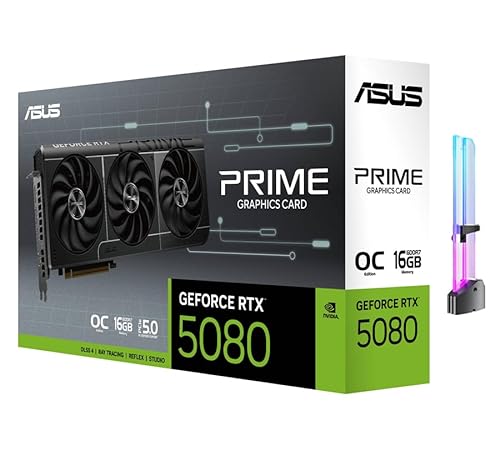
- 16GB GDDR7 helps reduce VRAM bottlenecks for local LLMs
- 1827 AI TOPS and 5th Gen Tensor Cores speed AI workflows
- Triple-fan cooling and GPU holder support stable builds
Best For: Users who want a powerful ASUS GPU for local inference, AI creation, and high-end multitasking.
Best for Compact High-End Builds

- 1801 AI TOPS for demanding local AI tasks
- SFF-Ready 2.5-slot design fits smaller builds
- Axial-tech triple-fan cooling and Dual BIOS
Best For: Compact enthusiast PCs that need strong local AI performance without a huge GPU footprint.
Best Quiet Cooling Pick
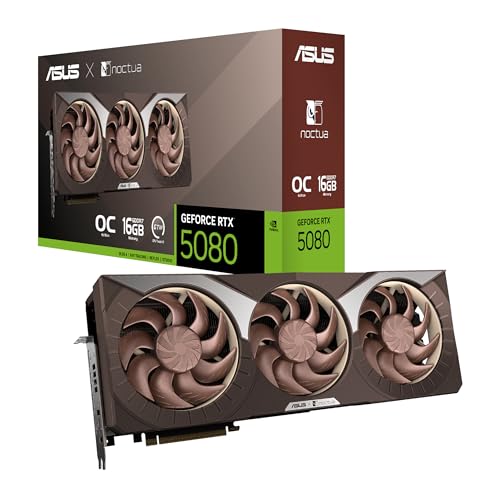
- Exceptionally quiet triple-fan Noctua cooling
- 16GB GDDR7 and 1858 AI TOPS for local AI
- High-end Blackwell RTX 5080 performance
Best For: Users who want fast local AI performance with premium cooling and low noise.
Best Compact RTX 16GB Pick

- 16GB GDDR7 helps with local AI headroom
- Compact 2.5-slot design fits smaller cases
- 767 AI TOPS and Blackwell architecture
Best For: Builders who want a compact 16GB GPU for local AI and everyday gaming.
Best for Creator Workstations – ASUS ProArt RTX 5080 16GB OC
If you want an asus graphics card for local ai that can also handle serious creative work, the ProArt RTX 5080 is a strong fit. It pairs Blackwell-based RTX 50 Series performance with 16GB of GDDR7, fast PCIe 5.0 connectivity, and a cooling setup built to stay composed in compact or full-size systems.
Best For: AI developers, content creators, and power users who want a premium card with strong thermals, a cleaner look, and extra workflow flexibility.
Pros:
- 1858 AI TOPS and RTX 50 Series performance suit local AI workloads
- 2.5-slot design with Axial-tech fans, vapor chamber, and MaxContact cooling
- USB Type-C port adds useful versatility for creator setups
- SFF-ready sizing helps it fit more builds than many high-end cards
Cons:
- 16GB VRAM may be limiting for the largest local AI models
- Premium pricing is likely versus more mainstream GPUs
For buyers comparing an asus graphics card for local ai, this model stands out because it balances workstation-friendly design, strong cooling, and modern RTX capabilities without feeling oversized. It makes the most sense if you want a refined GPU that can serve both AI inference and creative production.
Best for Heavy Local AI Workloads – ASUS ROG Astral RTX 5090 OC 32GB
If you want an asus graphics card for local ai that can handle bigger models and creator workflows without constantly worrying about VRAM limits, this RTX 5090 OC edition is built for that job. The 32GB GDDR7 buffer, wide 512-bit interface, and strong AI-focused tensor performance make it a serious pick for local LLM inference, image generation, and demanding media tasks.
Best For: Power users running local LLMs, AI-assisted content creation, and heavy multitasking on a single high-end GPU.
Pros:
- 32GB GDDR7 gives ample headroom for larger local models and longer contexts.
- AI-focused hardware is well suited to upscaling, denoise, masking, and generative workflows.
- Quad-fan cooling and vapor chamber design help sustain performance under long workloads.
- Includes a GPU holder plus multiple DP and HDMI outputs for multi-display setups.
Cons:
- Very expensive and far beyond what most casual users need.
- Large, power-hungry card that demands a roomy case and strong PSU.
- Overkill if you only run small models or light AI tools.
This is a top-tier asus graphics card for local ai if your priority is maximizing VRAM, bandwidth, and sustained performance rather than saving money. For advanced creators and AI experimenters, it offers the kind of hardware headroom that keeps local workloads comfortable as they grow.
Best for Heavy-Load Cooling – ASUS TUF RTX 5080 OC 16GB
If you want an asus graphics card for local ai that can stay cool under sustained workloads, the ASUS TUF Gaming GeForce RTX 5080 OC Edition is built for the job. Its 16GB GDDR7 memory, Blackwell architecture, and oversized TUF cooling hardware make it a strong fit for larger models, long inference sessions, and mixed creator workloads.
Best For: Power users who need a durable, high-airflow GPU for local AI, 3D work, and heavy gaming in one card.
Pros:
- 16GB GDDR7 memory and Blackwell architecture for demanding AI and creative tasks
- Massive 3.6-slot cooler with three Axial-tech fans for sustained thermal performance
- Military-grade components and protective PCB coating improve durability
- Phase-change GPU thermal pad helps maintain cooler operation under load
Cons:
- Large card size may be tough to fit in smaller cases
- Overkill for lighter AI models or basic workstation use
- Premium-class hardware usually comes with a premium price
This is a smart pick if you need an asus graphics card for local ai that prioritizes stability, cooling, and longevity over compact size. It is especially appealing for builders who expect their GPU to run hard for long stretches.
Best For Small-Form-Factor AI Builds – ASUS Prime RTX 4070 12GB SFF
If you want an asus graphics card for local ai that fits smaller cases without giving up modern CUDA-era acceleration, this SFF-Ready Prime RTX 4070 is a strong middle-ground option. Its 12GB GDDR6X memory, DLSS 3 support, and Ada Lovelace Tensor Cores make it a practical pick for inference, light model work, and mixed creative workloads.
Best For: Compact desktops that need a relatively efficient, AI-capable GPU with better case compatibility.
Pros:
- SFF-ready 2.5-slot design suits smaller builds better than many full-size cards
- 12GB GDDR6X and Ada Tensor Cores help with local AI and GPU-accelerated apps
- Axial-tech cooling and dual-ball bearings aim for durable, quieter operation
- DLSS 3 and strong ray-tracing support add extra value for gaming and content work
Cons:
- 12GB VRAM is usable, but not ideal for larger local AI models
- Not as strong a value for pure AI workloads as higher-VRAM cards
- Small-form-factor focus may limit appeal if you have a roomy mid-tower case
For buyers prioritizing a compact, balanced asus graphics card for local ai, this model stands out more for fit and efficiency than brute-force memory capacity. It is a smart choice if you want NVIDIA ecosystem compatibility in a smaller system and can work within 12GB limits.
Best Extreme-Performance Pick – ASUS ROG Matrix RTX 5090 OC
If you want an asus graphics card for local ai that also sits at the absolute top end of gaming hardware, this ROG Matrix Platinum RTX 5090 is built for enormous model workloads and heavy multitasking. Its 32GB GDDR7 frame buffer, PCIe 5.0 interface, and Blackwell Tensor Core features make it a serious choice for running large local AI models, while the oversized cooling solution is designed to keep performance steady under sustained load.
Best For: Enthusiasts, creators, and AI power users who want one flagship ASUS card for local inference, content creation, and top-tier gaming.
Pros:
- 32GB GDDR7 and a 512-bit bus provide a huge memory pool for demanding local AI workloads.
- Liquid metal cooling and a vapor chamber help maintain performance during long inference sessions.
- 5th-Gen Tensor Cores and DLSS 4 add strong AI acceleration beyond raw GPU horsepower.
- Premium power delivery and OC headroom suit users who want maximum tuning potential.
Cons:
- Very expensive and heavily overbuilt for casual AI users.
- Massive triple/quad-slot design needs a spacious case and strong airflow.
- High power requirements make this a poor fit for modest systems.
For buyers seeking an asus graphics card for local ai, this is more about no-compromise headroom than value. It makes sense if you want flagship VRAM capacity, advanced cooling, and room to grow into larger models without immediately running into GPU limits.
Best for SFF Local AI Builds – ASUS Prime RTX 5070 12GB SFF-Ready
If you want an asus graphics card for local ai that can fit into a smaller workstation, this ASUS Prime RTX 5070 is a strong middle-ground pick. It brings Blackwell architecture, DLSS 4, and 12GB of fast GDDR7 memory, while the 2.5-slot cooler and SFF-ready design make it easier to plan around tight cases without giving up modern connectivity.
Best For: Small-form-factor AI and creator PCs that need current-gen NVIDIA performance in a compact, build-friendly card.
Pros:
- SFF-ready design is friendlier to compact cases than many higher-end cards
- 12GB GDDR7 and RTX 5070 performance suit local AI, inference, and light model work
- Axial-tech fans and phase-change thermal pad help with cooler, steadier operation
- HDMI 2.1 and DisplayPort 2.1 support modern high-refresh and multi-display setups
Cons:
- 12GB VRAM may be limiting for larger local AI models
- 2.5-slot cooling still needs enough clearance in very tight builds
- Not the cheapest way to get into NVIDIA CUDA-capable hardware
For buyers prioritizing a compact, modern NVIDIA card, this is an appealing asus graphics card for local ai—especially if your build needs better case compatibility and efficient cooling more than maximum VRAM.
Best for Local AI Workloads – ASUS Prime RTX 5080 OC 16GB
If you want an asus graphics card for local ai that can handle heavier inference and creator workflows, this RTX 5080 OC model is built for the job. Its 16GB GDDR7 memory, 5th Gen Tensor Cores, and high AI TOPS count make it a strong fit for running local LLMs, image generation, and GPU-accelerated editing without constantly fighting VRAM limits.
Best For: Buyers who need a high-end ASUS GPU for local LLM inference, AI content creation, and demanding multitasking.
Pros:
- 16GB GDDR7 and 256-bit memory interface help with larger models and heavier AI workloads
- 5th Gen Tensor Cores and 1827 AI TOPS support fast AI-assisted editing and inference
- Triple-fan cooling and included GPU holder improve stability in bigger builds
- DP 2.1b and HDMI 2.1b outputs suit multi-display creator setups
Cons:
- Requires a strong 850W-class power supply and a 16-pin connector
- Overkill if you only need light AI tasks or modest 1080p gaming
- High-end pricing may be hard to justify for casual users
This is a compelling asus graphics card for local ai if you want serious headroom for private on-device models, creative acceleration, and premium gaming in one card. It is most attractive when you can use the extra VRAM and throughput, not just the gaming frame rates.
Best for Compact High-End Builds – ASUS Prime RTX 5080 EVO 16GB
If you want an asus graphics card for local ai that can handle serious model work without demanding a giant case, the ASUS Prime RTX 5080 EVO is a strong fit. Its Blackwell-based RTX 5080 GPU brings 1801 AI TOPS, while the 2.5-slot SFF-Ready design and Axial-tech cooling make it easier to slot into smaller, performance-focused systems.
Best For: Enthusiasts building a compact but powerful AI workstation that also needs top-tier gaming and creator performance.
Pros:
- 1801 AI TOPS and RTX 5080-class power are well suited to local AI workloads
- SFF-Ready 2.5-slot design improves compatibility in smaller cases
- Triple-fan Axial-tech cooling helps maintain boost performance under load
- Dual BIOS and GPU Tweak III add flexibility for tuning and monitoring
Cons:
- High-end pricing makes it a major investment
- 16GB VRAM may be limiting for some larger local AI models
- Still requires a capable PSU and well-ventilated system
For buyers who want an asus graphics card for local ai and need a balance of size, cooling, and raw acceleration, this card stands out as a practical premium option. It is especially compelling if you want one GPU for AI, gaming, and creative work in a smaller build.
Best Quiet Cooling Pick – ASUS RTX 5080 Noctua OC
If you want an asus graphics card for local ai that can handle demanding models without sounding like a jet engine, this ASUS GeForce RTX 5080 Noctua OC Edition is built for exactly that kind of workflow. Its Blackwell architecture, 16GB of GDDR7, and 1858 AI TOPS give it the speed headroom needed for inference, image generation, and other GPU-heavy tasks.
Best For: Creators and AI enthusiasts who want high-end local AI performance with excellent cooling and very low noise.
Pros:
- Quiet Noctua triple-fan cooling is ideal for long local AI sessions
- RTX 5080 performance plus 16GB GDDR7 helps with larger workloads
- DLSS 4 and Blackwell support add future-facing value
- Strong thermal design with steam chamber and phase-change GPU pad
Cons:
- Very expensive compared with mainstream cards
- Large cooler may be difficult to fit in smaller cases
- 16GB VRAM is solid, but power users may still want more for very large models
This is a smart asus graphics card for local ai if your priority is balancing top-tier acceleration with a quieter workstation experience. It is especially appealing for users who run models for long stretches and care about thermals and acoustics as much as raw speed.
Best Compact RTX 16GB Pick – ASUS Dual RTX 5060 Ti 16GB OC
If you want an asus graphics card for local ai that balances modern tensor performance with a space-saving design, this ASUS Dual RTX 5060 Ti 16GB is a smart middle-ground choice. The 16GB GDDR7 frame buffer, 767 AI TOPS rating, and Blackwell architecture make it a practical fit for running smaller models, inference workloads, and AI-assisted creative tasks without moving up to a much larger card.
Best For: Builders who need a compact 16GB GPU for local AI, mixed productivity, and gaming in tighter cases.
Pros:
- 16GB VRAM is useful for local AI workloads that need more headroom than 8GB cards.
- 2.5-slot Dual design and Axial-tech fans improve compatibility in smaller builds.
- 0dB mode helps keep noise down during lighter workloads.
- PCIe 5.0, HDMI 2.1b, and DisplayPort 2.1b support make it well-rounded for modern systems.
Cons:
- Not ideal for users who want the fastest possible model training performance.
- Still requires a capable PSU and case airflow for sustained AI loads.
- Dual-fan cooling is compact, but not as robust as larger triple-fan cards.
For buyers prioritizing a balanced asus graphics card for local ai, this model stands out for packing 16GB of VRAM into a compact card that can fit more builds than bulkier options. It is a good pick if you want dependable local inference capacity without overcommitting to a high-end workstation GPU.
How We Picked the Best Asus Graphics Card for Local AI
We prioritized cards that balance AI-relevant memory capacity, modern CUDA and tensor performance, and practical thermals. For local AI, the best card is not always the fastest gaming card; it is the one that can keep the model in VRAM and run it reliably in your system.
We also considered cooling design, power requirements, physical size, and whether the card is realistic for compact workstations or full-tower rigs. That matters a lot when choosing an Asus Graphics Card for Local AI, especially if you plan to run long inference sessions or multiple applications at once.
Quick Comparison
If you want the simplest rule: 12GB is the floor for lighter models, 16GB is the practical sweet spot for most users, and 32GB is the best choice for large models, high throughput, and more advanced workflows. The newer RTX 50-series options generally offer better efficiency and AI acceleration, while SFF-ready cards are easier to fit into smaller cases.
Key Buying Factors for Asus Graphics Card for Local AI
VRAM Capacity
VRAM is the first spec to check. More memory lets you load larger models, use longer context windows, and avoid slowdowns from swapping. For many local AI users, 16GB is the minimum comfortable target, while 32GB is ideal for serious model experimentation.
Memory Bandwidth and Tensor Performance
AI workloads benefit from high memory bandwidth and strong tensor-core throughput. Newer cards in the RTX 50-series can improve responsiveness in inference and generation tasks, especially when paired with well-optimized software.
Cooling and Power
Long AI sessions create steady load, so cooler designs matter. Triple-fan, quad-fan, and premium cooling solutions can help sustain boost clocks. Also check PSU capacity and connector requirements before buying.
Case Size and Slot Clearance
Some of the strongest cards are also the largest. If your workstation is compact, an SFF-ready option may be the better choice even if it gives up some raw headroom.
Who Should Buy Which Asus Graphics Card for Local AI?
If you are building a compact local AI rig or need good value, a 12GB card can work for lighter models and experimentation. If you want the best all-around option for most users, aim for a 16GB ASUS GPU with strong cooling and modern PCIe 5.0 support. If you are running larger models, image generation at scale, or heavier multitasking, step up to a 32GB flagship.
In short, choose the smallest card that still meets your VRAM needs, then prioritize cooling, power delivery, and physical fit. That approach will give you the most stable Asus Graphics Card for Local AI setup for your budget and workload.