
The right XLR cable helps preserve clean, balanced audio while standing up to repeated plugging, coiling, and transport. Whether you are connecting a microphone to an interface, mixer, speaker, or PA system, cable length and build quality matter.
We selected 10 XLR cables and multipacks covering short studio connections, long stage runs, touring use, and budget-conscious bulk setups. The guide below explains what separates a dependable cable from one that is likely to introduce noise or fail early.
Best 10 Xlr Cables Picks for 2026
Best Value Two-Pack
Cable Matters Premium XLR Cable

- Two 6-foot male-to-female cables
- 21 AWG OFC conductors for balanced audio
- Braided shielding and durable metal connectors
Best For: Home studios, live recording, and backup cable needs
Best for Long-Term Stage Use
AA AUDIO ACCESSORY 10ft XLR Cable

- 10-foot reach for flexible equipment placement
- REAN connectors with gold-plated contacts
- Kevlar core and dual shielding for demanding use
Best For: Stages, DJ booths, rehearsals, and studio setups
Best Budget Single Cable

- 10-foot male-to-female XLR connection
- All-copper conductors with spiral shielding
- Tangle-free design and metal connector housings
Best For: Budget home studios, PA systems, and general audio setups
Best Multi-Pack for Stages

- Six 20-foot male-to-female cables
- 22 AWG OFC conductors for balanced audio
- Shielding and metal housings for stage use
Best For: Multi-microphone rigs, venues, studios, and PA systems
Best Value 2-Pack
Cable Matters Premium XLR Cables

- Two 25-foot XLR cables
- 21 AWG OFC conductors
- Braided shielding and metal connectors
Best For: Studio and live-sound setups needing a spare cable
Best Multi-Pack

- Four 20-foot cables
- Color-coded connectors
- Double-shielded 24 AWG OFC design
Best For: Multi-channel audio and stage-lighting setups
Best for Road Use

- Three 25-foot cables
- Low-capacitance shielding
- Tension-resistant stress relief and lifetime guarantee
Best For: Touring and frequently handled professional audio gear
Long-Reach Pair
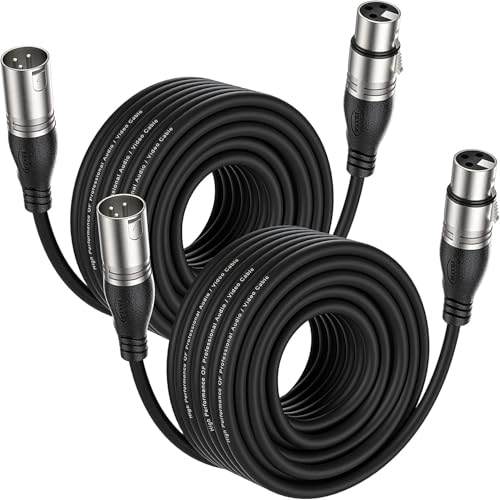
- Two 50-foot male-to-female cables
- OFC conductors with braided shielding
- Locking 3-pin connectors and flexible PVC jackets
Best For: Long microphone and live-sound runs
Everyday Studio Pick
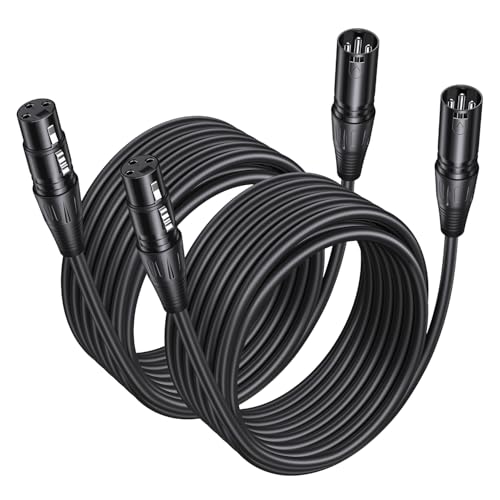
- Two versatile 25-foot cables
- OFC conductors and balanced design
- Self-locking connectors with durability testing
Best For: Studios and moderate-length audio setups
Multi-Channel Value

- Six 25-foot male-to-female cables
- Color-coded gold-plated connectors
- OFC wiring and braided shielding
Best For: Multi-channel rigs and stage setups
Best Value Two-Pack – Cable Matters Premium XLR Cable
For shoppers comparing xlr cables for microphones, mixers, or recording equipment, this two-pack from Cable Matters offers a practical combination of balanced signal performance and everyday versatility. Its 6-foot length suits many studio and live setups without adding excessive cable slack.
Best For: Home studios, live recording, and buyers who want a spare cable included.
Pros:
- Includes two male-to-female XLR cables for flexible setups or backup use.
- 21 AWG oxygen-free copper conductors support clear balanced audio transmission.
- Copper braided shielding, metal connectors, and molded strain relief help limit noise and improve durability.
Cons:
- At 6 feet, the cables may be short for larger stages or widely spaced equipment.
- Designed for indoor use according to the supplied specifications.
This is a sensible pick when you need reliable 3-pin XLR connectivity and the convenience of a two-pack. Choose a longer cable if your microphone and audio equipment will be positioned farther apart.
Best for Long-Term Stage Use – AA AUDIO ACCESSORY 10ft XLR Cable
These xlr cables are built for users who need extra reach and added protection in demanding studio, rehearsal, DJ, or live-performance environments. The 10-foot length, REAN connectors, dual shielding, and Kevlar-reinforced construction make this a feature-rich option for frequent use.
Best For: Performers, recording setups, and stage or DJ applications that need 10 feet of reach.
Pros:
- Genuine REAN connectors from Neutrik feature gold-plated contacts and a precise fit.
- Dual shielding and 21 AWG 99.99% OFC conductors help reduce hum, static, pops, and RF interference.
- Kevlar reinforcement, protected solder joints, and a PVC-and-nylon jacket support repeated handling.
- Includes a lifetime warranty and compatibility with a broad range of 3-pin XLR equipment.
Cons:
- The 10-foot length may be more cable than needed for compact desktop setups.
- The supplied notes describe a single cable rather than a multi-pack.
For buyers prioritizing reach and rugged construction, this cable stands out among the listed options. Its reinforced design is especially useful where cables are frequently pulled, bent, or repositioned.
Best Budget Single Cable – Amazon Basics 10ft XLR Cable
If you need a straightforward addition to your audio setup, this Amazon Basics cable is a practical choice among xlr cables. It provides a 10-foot male-to-female connection for microphones, mixers, speakers, and PA equipment, with all-copper conductors and spiral shielding for everyday use.
Best For: Budget-conscious home studios, PA systems, and general-purpose XLR connections.
Pros:
- 10-foot length provides useful reach between microphones and audio equipment.
- All-copper conductors and inner copper spiral shielding help minimize interference.
- Zinc alloy 3-pin connectors with nickel plating and protective metal housings support secure connections.
- Tangle-free round construction makes coiling and storage easier.
Cons:
- Only one cable is included.
- Its supplied specifications do not mention advanced reinforcement such as Kevlar.
This cable fits buyers who want dependable basic connectivity without paying for specialized stage-oriented construction. It is a convenient option for standard indoor recording and PA applications.
Best Multi-Pack for Stages – GEARit 20ft XLR Cable 6-Pack
For larger setups that require multiple long runs, this six-pack of GEARit xlr cables offers 20 feet per cable and balanced 3-pin male-to-female connections. The oxygen-free copper conductors, shielding, and metal connector housings are suited to studio, stage, podcast, and PA applications.
Best For: Musicians, venues, podcast setups, and audio systems needing several long cables at once.
Pros:
- Six 20-foot cables provide substantial reach and convenient coverage for multi-microphone setups.
- 22 AWG oxygen-free copper conductors support balanced audio connections.
- Shielding helps reduce EMI/RFI interference and unwanted static.
- Robust metal connector housings are designed for repeated plugging and unplugging.
Cons:
- A six-pack of 20-foot cables can create excess bulk for small or compact setups.
- The supplied specifications list indoor usage.
- Longer cables require more storage and careful coiling than shorter options.
This is the strongest fit for buyers building a multi-channel system or keeping replacement cables available. If you only need one short connection, a single 6- or 10-foot cable will be easier to manage.
Best Value 2-Pack – Cable Matters Premium XLR Cables
For dependable studio or live-sound connections, these xlr cables provide a practical two-cable setup with 25-foot reach. Their balanced design, OFC conductors, and braided shielding are aimed at clear audio with reduced interference.
Best For: Studio recording, live sound reinforcement, and users who want a spare XLR cable.
Pros:
- Includes two 25-foot male-to-female XLR cables.
- 21 AWG oxygen-free copper conductors support clear signal transmission.
- Copper braided shielding, metal connectors, and molded strain relief improve durability and noise rejection.
Cons:
- The 25-foot length may be more cable than compact setups need.
- This is a two-pack, so it may be less suitable when four cables are required immediately.
This is a versatile choice for connecting microphones, mixers, preamps, speakers, or other equipment with three-pin XLR connectors. The two-pack adds useful flexibility without requiring a separate spare purchase.
Best Multi-Pack – EBXYA 20-Foot XLR Cables
These xlr cables are suited to larger audio setups where multiple connections are needed. The four-pack combines 20-foot lengths, color-coded connectors, locking hardware, and double shielding for convenient organization and signal protection.
Best For: Live sound, studio recording, DMX stage lighting, and multi-cable setups.
Pros:
- Four 20-foot male-to-female cables provide broad setup flexibility.
- Different connector colors make cables easier to identify in use.
- 24 AWG OFC conductors with foil and copper-braid shielding help resist interference.
- Self-locking zinc-alloy connectors are designed for a secure connection.
Cons:
- The 20-foot length may not reach as far as a 25-foot cable.
- A four-pack may be more than needed for a simple single-microphone setup.
With four cables in one package, this set makes sense for mixers, microphones, speakers, and stage equipment that require several three-pin XLR connections. The color-coded ends are especially useful when multiple lines are running together.
Best for Road Use – Pig Hog Tour Grade XLR Cables
For performers and crews who regularly transport their gear, these xlr cables emphasize road-ready construction. The three-pack includes 25-foot cables with low-capacitance shielding, tension-resistant stress relief, and a lifetime guarantee.
Best For: Professional audio applications, touring setups, and connecting microphones to mixers or audio interfaces.
Pros:
- Three 25-foot male-to-female XLR cables provide useful reach and spares.
- Low-capacitance shielded cable is designed for professional audio connections.
- Tension-resistant stress relief supports repeated handling.
- Lifetime guarantee adds long-term ownership reassurance.
Cons:
- The supplied details specify indoor usage only.
- The three-pack may be more than necessary for a basic one-cable system.
This pack is a strong fit when durability and repeat setup matter more than having the largest number of cables. Its 25-foot length and tour-grade positioning make it practical for microphones, mixers, and other professional equipment.
Long-Reach Pair – 50ft XLR Cable 2-Pack
For setups that need extra reach, these xlr cables provide two 50-foot male-to-female leads for microphones, mixers, speakers, phantom power supplies, and other 3-pin XLR equipment. Their balanced construction, oxygen-free copper conductors, and braided shielding are designed to help reduce interference during recording or live sound use.
Best For: Home studios, live sound, stage setups, and longer microphone runs.
Pros:
- Two 50-foot cables provide substantial placement flexibility.
- Oxygen-free copper and high-density braided shielding support low-interference signal transmission.
- Locking 3-pin connectors help maintain a secure connection.
- Soft PVC jackets are flexible and easy to wipe clean.
Cons:
- The 50-foot length can be more cable than compact setups need.
- The package uses standard black cables, so individual leads may be harder to identify in a busy rig.
This pair is a practical choice when cable length matters most. It covers common 3-pin XLR applications while combining flexible jackets with shielding suited to indoor and outdoor use.
Everyday Studio Pick – 25ft Premium XLR Cable 2-Pack
These xlr cables offer a manageable 25-foot length in a two-pack, making them a versatile option for microphones, mixing boards, preamps, and speaker systems. Oxygen-free copper conductors, balanced construction, and a soft PVC jacket are intended to support clear audio with minimal interference.
Best For: Studios, KTV systems, home theater setups, and live audio rigs needing moderate cable length.
Pros:
- Two 25-foot cables balance reach with easier cable management.
- OFC conductors and balanced wiring help preserve audio fidelity.
- Self-locking connectors support quick, secure plug-and-play setup.
- Tested for more than 20,000 bends and 10,000 plug cycles according to the supplied notes.
Cons:
- At 25 feet, these may not suit wide-stage or distant-room installations.
- The supplied notes do not specify color-coding for identifying individual cables.
Choose this pair when you want a practical all-purpose length rather than maximum reach. Its compatibility with common 3-pin XLR equipment and durability-focused design make it suitable for regular setup and teardown.
Multi-Channel Value – 25ft XLR Cable 6-Pack
For multi-microphone or larger audio setups, this six-pack of 25-foot xlr cables provides several matching male-to-female leads at once. Gold-plated 3-pin connectors, oxygen-free copper, copper braided shielding, and color-differentiated connectors support organized connections across microphones, mixers, speakers, cameras, and DMX lighting.
Best For: Multi-channel studios, live sound, stage lighting, and users who need several cables at one length.
Pros:
- Six 25-foot cables are useful for expanding or wiring multiple channels.
- Different connector colors make individual cables easier to identify.
- Gold-plated, self-locking connectors support repeated plugging and unplugging.
- OFC conductors and copper braided shielding help reduce noise and hum.
Cons:
- A six-pack may be excessive for a single-microphone setup.
- All cables share the same 25-foot length, limiting flexibility for mixed-distance installations.
- The six-cable package is relatively heavy at 2.46 kg.
This is the strongest fit for buyers outfitting several XLR channels at once. Color-coded connectors add practical organization, while the 25-foot length works well for many indoor and outdoor applications.
How We Picked These Xlr Cables
We focused on practical factors that affect everyday audio performance: balanced male-to-female XLR connections, conductor materials, shielding, connector construction, cable length, pack size, and intended use. The selection includes affordable household-brand options, tour-oriented cables, and larger multipacks for bands, venues, studios, and event production.
Because product specifications and packaging can vary, buyers should confirm the listing details before ordering—especially connector type, cable length, and whether a cable is intended for microphone audio rather than lighting control.
Quick Comparison
| Best For | Typical Lengths | What to Look For |
|---|---|---|
| Home recording | 6–10 feet | Low noise, flexible jacket, reliable connectors |
| Stage and rehearsal use | 20–25 feet | Durable strain relief and dependable shielding |
| Large setups | Multi-packs | Consistent construction and useful quantity |
| Long-distance runs | 50 feet | Strong shielding and careful cable management |
Key Buying Factors for Xlr Cables
Length and Cable Management
Choose the shortest length that comfortably reaches between components. Six- to 10-foot cables are easier to manage in a studio, while 20- to 25-foot options provide flexibility on stage. A 50-foot cable can solve difficult routing problems but creates more opportunities for tangles and trip hazards.
Shielding and Conductor Quality
Balanced XLR connections reject much of the electromagnetic interference picked up along a cable run, but construction still matters. Copper conductors, oxygen-free copper options, and dual shielding can support a quiet signal, particularly near power supplies, lighting equipment, or other sources of interference.
Connectors and Durability
Look for secure male-to-female connectors, firm locking action, flexible jackets, and reinforced strain relief. Gold-plated contacts may resist corrosion, but connector fit and overall construction are usually more important than plating alone.
Audio Versus DMX Compatibility
Some cables are marketed for both microphones and DMX equipment. They may work in certain setups, but DMX systems have specific impedance requirements. For critical lighting installations, choose a cable designed and rated for DMX rather than assuming every three-pin XLR cable is interchangeable.
Who Should Buy Which Xlr Cables?
Home recordists and podcasters: Choose a 6- or 10-foot cable for a tidy connection between a microphone and interface or mixer.
Bands and rehearsal spaces: A 20- or 25-foot multipack offers useful reach for stage layouts and keeps spare cables available.
Touring musicians and venues: Prioritize tour-grade construction, reinforced connectors, and consistent performance over the lowest price.
Studios and event producers: Larger packs make sense when several microphones or speakers must be connected at once. Buy extra cables if downtime would be costly.