
A good office chair should support more than your lower back. The best ergonomic office chairs with headrests also help position your neck, shoulders, and upper body during long work sessions.
We compared 10 models across adjustability, lumbar support, recline range, materials, armrests, and practical extras such as footrests. Use this guide to narrow the options by your workspace, posture needs, and budget.
Best 10 Ergonomic Office Chairs with Headrests Picks for 2026
Balanced Mesh Support
SIHOO M18 Ergonomic Office Chair

- Adjustable headrest and lumbar support
- Breathable mesh back
- 330-pound capacity with reclining
Best For: Home and office users wanting adjustable mesh support
Plush Adjustable Comfort
Marsail Ergonomic Office Chair
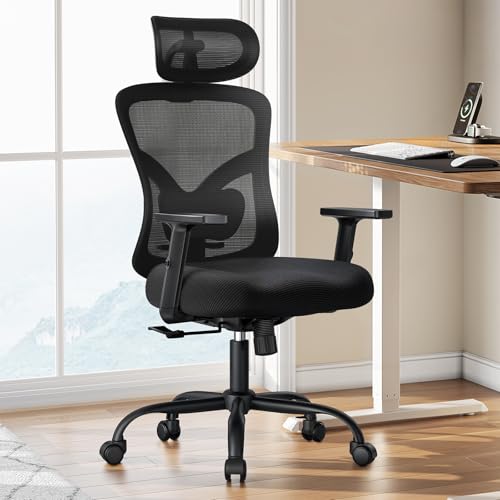
- 2D tilting and height-adjustable headrest
- Thick 3.15-inch foam seat
- Breathable mesh with 300-pound capacity
Best For: Users wanting cushioned comfort for work or gaming
Recline-and-Rest Heavy Duty Pick
Ergonomic Office Chair with Footrest

- 365-pound heavy-duty capacity
- 90–145-degree recline with footrest
- Adjustable headrest and lumbar depth
Best For: Big-and-tall users seeking work-to-rest versatility
Space-Saving Everyday Support
Yaheetech Ergonomic Office Chair

- Large adjustable headrest and lumbar pillow
- Roomy cushioned seat with mesh back
- Flip-up armrests save desk space
Best For: Space-conscious home offices needing a roomy chair
Executive Comfort Pick
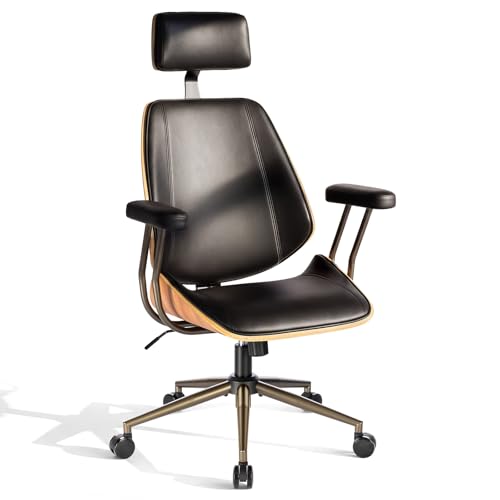
- Padded high back with integrated headrest
- Adjustable height and 360-degree swivel
- Faux leather with walnut accent detail
Best For: Executive-style home offices and cushioned long-session seating
Heavy-Duty Mesh Pick
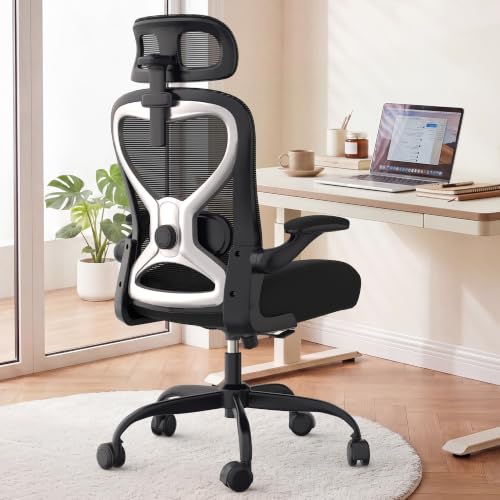
- 3D headrest adjusts in three directions
- Adjustable lumbar support and tilt tension
- Supports up to 350 pounds
Best For: Long workdays, compact offices, and higher weight capacity needs
Most Adjustable Pick

- 2D headrest and 3D adjustable armrests
- 90-to-120-degree recline range
- Adjustable lumbar support with breathable mesh back
Best For: Posture customization across work, reading, and relaxation
Best Faux-Leather Pick
Adjustable-Headrest Executive Chair

- 2-inch sliding headrest for personalized neck support
- Contoured lumbar padding with 90°–120° tilt
- Flip-up arms and 300-pound capacity
Best For: Padded home-office seating with easy-clean upholstery
Best for Relaxation

- Breathable mesh with a 3D adjustable headrest
- Five-level lumbar support and 90°–130° recline
- Retractable footrest with adaptive 3D arms
Best For: Long work sessions followed by desk-side relaxation
Best Weight Capacity

- 3D headrest, adjustable lumbar, and 3-way arms
- 4.3-inch high-density foam seat cushion
- Tilt locks and stated 399.04-pound capacity
Best For: Sturdy, adjustable seating for home office or gaming
Balanced Mesh Support – SIHOO M18 Ergonomic Office Chair
The SIHOO M18 is a practical choice among ergonomic office chairs with headrests for users who want breathable mesh, adjustable lumbar support, and several ways to fine-tune their sitting position. Its recommended height range is 5’6″ to 6’2″, making it a particularly suitable option for many standard-height desks.
Best For: Home and office users seeking adjustable support and a breathable mesh back.
Pros:
- Adjustable headrest, lumbar support, seat height, and back support.
- Breathable mesh back helps promote airflow during extended sitting.
- 330-pound maximum weight recommendation and BIFMA testing noted.
- Three-position reclining and 2D armrests add positioning flexibility.
Cons:
- The stated recommended height range may not suit shorter or taller users.
- Assembly is required.
The M18 emphasizes everyday adjustability without adding a footrest or oversized relaxation features. Its mesh construction and broad adjustment range make it a sensible all-purpose pick for focused desk work.
Plush Adjustable Comfort – Marsail Ergonomic Office Chair
The Marsail combines a 2D headrest with a thick foam seat, adjustable lumbar support, and a breathable mesh back. For shoppers comparing ergonomic office chairs with headrests, it stands out as a comfort-focused option that also works for gaming, reading, and extended computer sessions.
Best For: Users who prioritize a padded seat and adjustable neck and lower-back support.
Pros:
- 2D headrest adjusts 2.8 inches in height and tilts up to 45 degrees.
- 2.4-inch lumbar adjustment helps target the lower back.
- Thick 3.15-inch foam seat provides substantial cushioning.
- Metal base, Class 3 gas lift, and 300-pound capacity support daily use.
Cons:
- Only one reclining position is listed.
- Assembly is required.
This chair favors softness and supportive adjustability over a highly complex reclining system. Its combination of foam padding and airflow-oriented mesh makes it well suited to users who want a more cushioned desk chair.
Recline-and-Rest Heavy Duty Pick – Ergonomic Office Chair with Footrest
This high-capacity chair is one of the more versatile ergonomic office chairs with headrests, adding a retractable footrest to its adjustable lumbar system and multi-angle headrest. Its 90-to-145-degree recline makes it suitable for switching between upright work, reading, gaming, and short rest periods.
Best For: Big-and-tall users who want reclining comfort and an integrated footrest.
Pros:
- Supports up to 365 pounds with a Class 4 gas lift and reinforced base.
- Headrest rotates up to 45 degrees and lumbar depth adjusts by 2 cm.
- Reclines from 90 to 145 degrees with a retractable padded footrest.
- Linkage armrests adjust with the reclining motion.
Cons:
- Its larger feature set may take more space than a basic desk chair.
- Assembly is required.
The 550S is designed for users who want a chair that can function as both a workstation seat and a relaxation chair. Its heavy-duty construction and wide recline range are the main reasons to choose it over a simpler office model.
Space-Saving Everyday Support – Yaheetech Ergonomic Office Chair
The Yaheetech offers a straightforward set of features for shoppers seeking ergonomic office chairs with headrests, including a large adjustable headrest, movable lumbar pillow, cushioned seat, and breathable mesh back. Its flip-up armrests also make it easier to slide the chair under a desk when space is limited.
Best For: Home offices that need a roomy seat and fold-away armrests.
Pros:
- Large adjustable headrest and movable lumbar pillow provide customizable support.
- 20.5-inch-wide cushioned seat offers a roomy sitting area.
- Flip-up padded armrests help conserve space beneath a desk.
- 300-pound capacity and five swivel casters support everyday mobility.
Cons:
- Only one reclining position is listed.
- Assembly is required.
This model keeps the design practical, focusing on basic ergonomic adjustments, a generous seat, and space-saving arms rather than advanced reclining features. It is a sensible fit for users who want a comfortable office chair that can tuck away neatly.
Executive Comfort Pick – Faux Leather High-Back Chair
For shoppers seeking ergonomic office chairs with headrests and a more traditional executive look, this high-back model combines a padded headrest, cushioned upholstery, and adjustable height. Its faux-leather finish and walnut accent detail suit a polished home office, study, or library.
Best For: Extended desk work, reading, and executive-style home offices where cushioned comfort and appearance matter.
Pros:
- Padded high back and integrated headrest provide neck and shoulder support.
- Thick foam padding covers the seat, backrest, and headrest.
- Adjustable height, 360-degree swivel, and rolling casters support flexible desk use.
- Supports up to 300 pounds and includes padded armrests.
Cons:
- Faux leather may feel less breathable than mesh during extended use.
- The chair has one listed reclining position rather than a broad reclining range.
- Assembly is required.
This is a strong choice if you prefer a supportive, padded executive chair over a breathable mesh design. Choose it for style and cushioning, especially in a workspace where the walnut accent and black upholstery complement the room.
Heavy-Duty Mesh Pick – 3D Headrest Office Chair
This model stands out among ergonomic office chairs with headrests for its adjustable 3D headrest, contoured mesh back, and customizable lumbar cushion. A supportive foam seat, flip-up armrests, and rocking function make it practical for long workdays and flexible home-office setups.
Best For: Users who want adjustable neck and lumbar support, a breathable back, and a chair rated for up to 350 pounds.
Pros:
- 3D headrest adjusts for height, depth, and angle.
- Dual-direction lumbar adjustment allows more precise lower-back positioning.
- Mesh back promotes airflow, while the virgin foam seat is designed for extended sitting.
- Flip-up armrests and adjustable tilt tension suit compact or multi-use workspaces.
Cons:
- The seat cushion is foam rather than mesh, which may feel warmer than the back.
- Its black-and-silver styling may be less suited to traditional executive décor.
- Assembly is required.
With the highest listed weight capacity in this roundup and extensive headrest and lumbar adjustments, this chair is a practical fit for demanding daily use. Its mesh back and flip-up arms add flexibility without sacrificing key ergonomic features.
Most Adjustable Pick – Marsail Mesh Chair
The Marsail chair is a versatile option for shoppers comparing ergonomic office chairs with headrests. It pairs a 2D adjustable headrest with adjustable lumbar support, a 90-to-120-degree recline range, and 3D armrests, while its mesh back helps promote airflow during work or study.
Best For: Users who want broad posture customization, flexible reclining, and a supportive mesh chair for office, reading, or relaxing.
Pros:
- 2D headrest, 3D armrests, and adjustable lumbar support accommodate different postures.
- Backrest reclines from 90 to 120 degrees for working or relaxing.
- Mesh back promotes airflow, and the 3.14-inch high-density foam seat adds cushioning.
- Flip-up armrests and a 330-pound capacity support flexible everyday use.
Cons:
- Assembly is required.
- The blue finish may not match every office décor.
- Its extensive adjustments may take time to fine-tune.
This is the strongest fit for buyers who prioritize adjustability over a simple setup. The combination of headrest, lumbar, armrest, and recline controls makes it adaptable across focused work, reading, and relaxation.
Best Faux-Leather Pick – Adjustable-Headrest Executive Chair
If you prefer a padded executive feel, this chair is a practical option among ergonomic office chairs with headrests. Its sliding headrest, contoured lumbar padding, tilt function, and wipe-clean faux leather are suited to long work, study, or gaming sessions.
Best For: Home-office users who want a cushioned faux-leather chair with a space-saving design.
Pros:
- Headrest slides through a 2-inch range and is designed for users up to 6’3″.
- Contoured lumbar padding and wrapped side wings encourage supported posture.
- 90°–120° tilt, adjustable rocking tension, and 360° swivel enable active sitting.
- Flip-up arms, 3.1-inch height adjustment, and a 300-pound capacity add everyday versatility.
Cons:
- Faux leather may feel warmer than breathable mesh during extended use.
- It offers less recline than the mesh models in this roundup.
This is a straightforward choice for buyers who value easy cleaning, padding, and compact storage. The one-year warranty and stated under-20-minute assembly are useful conveniences for a home-office setup.
Best for Relaxation – Mesh Chair with Footrest
This MALOL model stands out among ergonomic office chairs with headrests for combining breathable mesh with a retractable footrest. Its 3D headrest, five-level lumbar adjustment, reclining backrest, and adaptive arms support work, study, gaming, and breaks.
Best For: Users who want a breathable work chair that can recline for relaxation.
Pros:
- Elastic knitted mesh promotes airflow during long sitting periods.
- 3D headrest adjusts in height and angle, while the lumbar system offers five height settings.
- 90°–130° recline, tilt control, and a retractable footrest support rest breaks.
- Adaptive 3D arms, silent casters, and a 300-pound capacity add flexibility.
Cons:
- The footrest and multiple adjustments may create more setup and adjustment complexity.
- Its 40.9-pound weight and larger high-back form may be less convenient for compact spaces.
Choose this chair if airflow and reclined comfort matter as much as upright desk support. It is especially well suited to a multipurpose office or gaming room where a footrest can be useful.
Best Weight Capacity – Wide Mesh Office Chair
For buyers comparing ergonomic office chairs with headrests, this wide mesh chair emphasizes adjustability and load capacity. It pairs a 3D headrest with adjustable lumbar support, 3-way arms, a thick foam cushion, and tilt-lock positions for home-office or gaming use.
Best For: Users seeking a sturdy, highly adjustable mesh chair with a higher stated weight capacity.
Pros:
- 3D headrest, adjustable lumbar lever, and 3-way PU arms allow targeted positioning.
- 4.3-inch high-density foam cushion is designed to resist sagging.
- 90°–120° tilt with locks at 90°, 110°, and 135° supports work and relaxation.
- Metal base, SGS-certified gas lift, quiet wheels, and a stated 399.04-pound capacity provide a durable setup.
Cons:
- It lacks a footrest, unlike the MALOL chair.
- The supplied details estimate 15–30 minutes for assembly, so setup may take longer than the first chair.
This model makes sense when adjustability, cushioning, and a robust weight rating are priorities. Its mesh back can improve airflow, while the multiple tilt-lock positions make it adaptable to focused work and occasional reclining.
How We Picked the Best Ergonomic Office Chairs with Headrests
We focused on features that affect everyday comfort rather than relying on appearance alone. Our comparison considers headrest adjustability, lumbar support, seat and backrest design, armrest movement, recline range, weight capacity where available, and the chair’s suitability for extended desk work. We also noted practical differences between breathable mesh, cushioned upholstery, executive-style leather, and models with built-in footrests.
Because chair fit is personal, no single model is ideal for everyone. The strongest choices offer several independent adjustments so users can align the chair with their height, desk, monitor, and preferred working position.
Quick Comparison
- Best all-around mesh options: SIHOO M18 and the Marsail mesh chairs offer breathable backrests and multiple ergonomic adjustments.
- Best for reclining and breaks: Footrest-equipped models with wide recline ranges are useful for reading, resting, or switching between tasks.
- Best for compact workspaces: Chairs with flip-up arms can slide under a desk more easily when not in use.
- Best for a traditional executive look: The leather chair provides a more upholstered appearance and a cushioned feel.
- Best for customized upper-body support: Models with 2D or 3D headrests and adjustable arms offer more positioning flexibility.
Key Buying Factors
Headrest and Neck Adjustment
A headrest should support the back of your head without pushing it forward. Look for height and tilt adjustment, especially if you alternate between upright typing and reclined viewing. A fixed headrest can still work, but only if its position matches your body and desk setup.
Lumbar and Seat Support
Adjustable lumbar support is more useful than a deeply shaped backrest that cannot be repositioned. Check whether the lumbar area moves vertically or in depth. Also consider seat width, cushion firmness, and seat-depth adjustment if you are particularly tall or short.
Recline, Arms, and Materials
A synchronized recline mechanism can reduce pressure during breaks, while adjustable armrests help keep shoulders relaxed. Mesh is usually cooler; padded or leather-style upholstery may feel softer and look more formal. Footrests add versatility but require enough clearance around the chair.
Fit and Setup
Measure your desk height, available floor space, and clearance behind the chair before ordering. Set the seat so your feet rest flat, your elbows remain near desk height, and your monitor sits close to eye level. Even the best chair cannot compensate for a poorly arranged workstation.
Who Should Buy Which Ergonomic Office Chairs with Headrests?
Choose a breathable mesh model if you work in a warm room or spend most of the day typing. Pick a chair with a wider seat, stronger lumbar adjustment, and a multi-position headrest if you need more room or frequently change posture. A reclining chair with a footrest suits users who want one chair for work and short recovery breaks. For a polished home-office setup, an executive upholstered model may be the better visual and tactile fit. If several people share the chair, prioritize broad adjustability over a specialized cushion or fixed support shape.