
Finding the right channel strip under $500 can add useful control over gain, dynamics, tone, and noise before a signal reaches your recorder or interface.
This roundup covers hardware, software, direct boxes, controllers, and compact digital options so you can match features to your recording workflow and budget.
Best 10 Channel Strips Under 500 Picks for 2026
Versatile Analog Control

- Mic preamp with four dedicated processing sections
- XLR and 1/4-inch inputs plus insert loop-out
- Rack-mountable 1U hardware with status LEDs
Best For: Vocal, instrument, streaming, and project-studio front ends
Precision DAW Processing

- Six-band parametric EQ with multiple filter types
- Separate compressor and expander/gate processing
- Includes delay for multimicrophone track alignment
Best For: OS X-based DAW mixing and detailed track processing
Compact 500-Series Tone Shaping
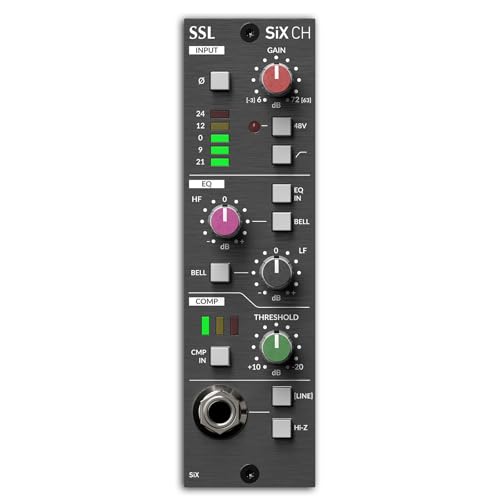
- Mic preamp, EQ, and single-knob compressor
- +48V phantom power and 75 Hz high-pass filter
- Front-panel TRS input with 1 MΩ Hi-Z switch
Best For: 500-series vocal and instrument tracking
Remote Digital Mixing

- 16-input rack-mountable digital mixer
- Remote control from up to 10 supported devices
- Built-in EQ, gates, compressors, effects, and USB functions
Best For: Small live systems needing remote multichannel control
Tube-Controlled Versatility

- Class A 12AX7 tube preamp
- VCA compression and 3-band EQ
- Mic, line, and instrument inputs
Best For: Flexible studio recording with integrated tone shaping
Simple Stereo Signal Matching

- Two passive DI channels
- Isolation transformer and ground lift
- 15 dB pad with XLR and 1/4-inch connections
Best For: Stereo instrument DI and isolated signal routing
Tube Recording Control
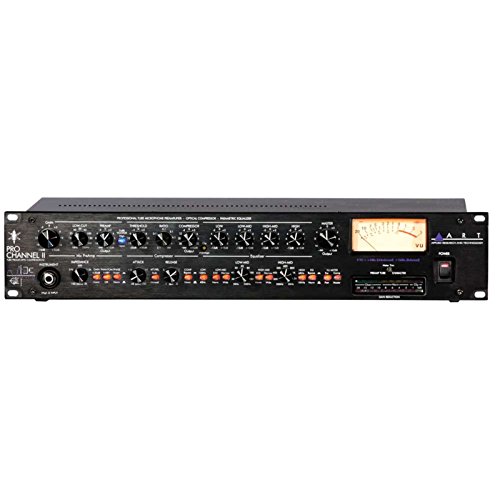
- Tube preamp, compressor, and EQ
- Selectable optical or tube compression
- Switchable VU output metering
Best For: Single-channel vocal and instrument recording
Best DAW Control

- Motorized fader and rotary encoders
- 3.5-inch TFT display with transport controls
- DAW integration via USB
Best For: Hands-on control of a single DAW channel strip
Best Tube Processing

- Mono tube channel-strip design
- Switchable microphone impedance
- Opto/FET compression and four-band EQ
Best For: Mono vocal and instrument recording chains
Best All-in-One Recording Strip

- Class A tube mic/instrument preamp
- Variable VCA compressor
- Three-band parametric EQ and analog VU meter
Best For: Home-studio microphone and guitar recording
Versatile Analog Control – dbx 286s Channel Strip
For anyone comparing channel strips under 500, the dbx 286s is a practical hardware option for shaping microphone or instrument signals before they reach the mixer or interface. It combines a mic preamp with compression, de-essing, enhancement, and expander/gate sections in a rack-mountable 1U design.
Best For: Vocal processing, instrument inputs, and home or project studios that want several dedicated hardware processing stages.
Pros:
- Includes compression, de-esser, enhancer, and expander/gate sections.
- Accepts XLR microphone and balanced or unbalanced 1/4-inch line inputs.
- Insert and loop-out connections allow integration with additional processors.
- Front-panel LEDs provide quick level and processor-status monitoring.
Cons:
- It is a single-channel processor rather than a multichannel mixer.
- Requires corded power and rack space for installation.
The dbx 286s stands out when hands-on, front-end vocal control matters more than software flexibility. Its separate processing sections and routing options make it adaptable for recording, streaming, and live signal preparation.
Precision DAW Processing – Metric Halo ChannelStrip 2
Among channel strips under 500, Metric Halo ChannelStrip 2 is aimed at engineers who prefer an in-the-box workflow. This native OS X plug-in combines EQ, compression, expander/gate processing, and delay for detailed track shaping inside a compatible digital audio workstation.
Best For: DAW-based mixing where flexible EQ, dynamics control, and low CPU overhead are more useful than physical hardware.
Pros:
- Provides six main parametric EQ bands plus two dynamics-sidechain bands.
- Includes separate compressor and expander/gate sections with automatic gain-riding functions.
- Delay function supports time alignment in multimicrophone recordings.
- Designed for pristine sound and efficient CPU use.
Cons:
- The supplied description identifies this version as native OS X.
- Compatibility notes direct newer Pro Tools, VST, and AU users toward ChannelStrip 3.
- It is software processing, so it does not provide physical inputs or outputs.
ChannelStrip 2 is a focused choice for users building mixes inside a DAW and needing detailed corrective EQ alongside dynamics control. Verify host and operating-system compatibility before purchasing, especially if using a newer setup.
Compact 500-Series Tone Shaping – SSL SiX Channel
The SSL SiX Channel is a compact contender among channel strips under 500 for studios already using a 500-series chassis. It combines a mic preamp, EQ, high-pass filter, and single-knob compressor, with a front-panel TRS input and Hi-Z switching for convenient instrument connections.
Best For: Engineers who want a streamlined SSL channel strip in a 500-series rack for microphone and instrument tracking.
Pros:
- Combines mic preamp, EQ, and single-knob compression in one module.
- Provides +48V phantom power for compatible condenser microphones.
- Offers a switchable 75 Hz, 12 dB/octave high-pass filter.
- Front-panel TRS line input includes a 1 MΩ Hi-Z switch.
Cons:
- Requires a compatible 500-series chassis.
- The compressor uses a simplified single-knob control rather than extensive parameter adjustment.
- Only one channel is provided.
The SiX Channel favors speed and straightforward operation over a deep control set. Its compact format and dedicated high-impedance input make it especially appealing for tracking vocals, instruments, and other individual sources in a modular rack.
Remote Digital Mixing – Soundcraft Ui16 Mixer
While not a conventional single-channel strip, the Soundcraft Ui16 is worth considering alongside channel strips under 500 when your priority is broad digital signal control. This rack-mountable mixer offers remote operation, multiple inputs, and built-in compression, gating, EQ, and effects for live or installed setups.
Best For: Small live systems, rehearsal spaces, and installations needing remote control and processing across multiple inputs.
Pros:
- Provides 16 inputs, including combo mic/line, mic, instrument, and stereo RCA connections.
- Can be controlled from up to 10 phones, tablets, PCs, or other supported devices.
- Includes dbx, DigiTech, and Lexicon processing, plus output EQ, gates, and compressors.
- Offers USB playback and two-channel direct recording to memory devices.
Cons:
- It is a complete digital mixer, not a dedicated one-channel channel strip.
- Remote operation depends on Wi-Fi or Ethernet connectivity.
- Its broad feature set may be more than needed for simple vocal processing.
The Ui16 makes the most sense when you need many channels and remote access rather than a traditional preamp-EQ-compressor chain. Its extensive I/O and onboard processing can consolidate a small live rig, provided your setup accommodates network-based control.
Tube-Controlled Versatility – PreSonus StudioChannel
For shoppers comparing channel strips under 500, the PreSonus StudioChannel combines a Class A 12AX7 tube preamp, VCA compressor, and three-band EQ in a single rackmount unit. Its mic, line, and instrument inputs make it a flexible choice for project and professional studios.
Best For: Vocal, instrument, and synth recording where preamp color, compression, and EQ are all useful.
Pros:
- High-voltage Class A tube preamp with adjustable tube drive
- VCA compressor includes automatic attack/release and soft or hard knee settings
- Three-band EQ provides a parametric mid band plus shelving or peak low and high bands
- Includes phantom power, polarity reverse, high-pass filter, and a -20 dB pad
Cons:
- Its 1U rackmount design and 10.5-pound weight may be more than a compact setup needs
- The many processing controls may require more setup time than a simpler preamp
The StudioChannel is a strong all-in-one option when you want tube character and practical dynamics and tone shaping in one chassis. It is especially adaptable for recording varied sources.
Simple Stereo Signal Matching – Radial ProD2 Passive DI
Among channel strips under 500, the Radial ProD2 is a different kind of studio utility: a passive two-channel direct box rather than a preamp, compressor, and EQ combination. It focuses on sending stereo instrument signals through transformer isolation with straightforward level management.
Best For: Stereo or dual-channel instrument connections that need passive DI conversion and isolation.
Pros:
- Provides two passive DI channels in one compact unit
- Isolation transformer helps separate connected signal paths
- Includes a ground-lift switch and 15 dB pad
- Supports 1/4-inch and XLR connections
Cons:
- Does not include a microphone preamp, compressor, or EQ
- Passive design offers fewer tone-shaping controls than a full channel strip
The ProD2 makes sense when your priority is reliable stereo DI connectivity and isolation rather than onboard processing. It is compact, lightweight, and purpose-built for signal routing.
Tube Recording Control – ART Pro Channel II
ART Pro Channel II Microphone Preamp/Compressor/EQ Professional Tube Based Selectable VU Metering
Check Price On AmazonFor buyers exploring channel strips under 500, the ART Pro Channel II offers three dedicated recording stages: a tube microphone preamp, a selectable optical or tube compressor, and a tube EQ. It is designed to add warm, smooth processing while keeping output monitoring visible through selectable VU metering.
Best For: Voice and instrument recording that benefits from tube-based preamp, compression, and EQ stages.
Pros:
- Combines tube mic preamp, compressor, and EQ in one channel
- Compressor can switch between optical and tube operation
- Selectable VU metering monitors mic pre output, compressor output, or main output
- Offers XLR, 1/4-inch TRS, and 1/4-inch TS connectivity
Cons:
- Provides one channel rather than a stereo pair
- Its 13.4-pound weight may not suit highly portable setups
The Pro Channel II is a focused choice for recording chains that value tube-based coloration and flexible compression modes. Its selectable metering is useful when checking different stages of the signal path.
Best DAW Control – Nektar Panorama CS12
If you want channel strips under 500 for hands-on DAW mixing rather than analog signal processing, the Nektar Panorama CS12 is a focused controller. It combines a motorized fader, rotary encoders, transport buttons, and a 3.5-inch TFT display in a USB-connected surface designed for compatible software including Cubase, Logic Pro, Nuendo, and Reaper.
Best For: Producers and engineers who want tactile control over one DAW channel strip.
Pros:
- Motorized fader and rotary encoders provide hands-on parameter control.
- Includes transport buttons and a 3.5-inch TFT display.
- Offers DAW integration with several listed platforms.
- Uses USB Type-C connectivity and includes a USB A-to-C cable.
Cons:
- It is a controller, not a microphone preamp or analog channel-strip processor.
- Listed compatibility is centered on Mac and specified DAW software.
The CS12 makes the most sense when workflow speed and physical control are your priorities. Choose it over an audio channel strip only if you already use plug-ins and need a dedicated tactile interface.
Best Tube Processing – ART Pro Channel III
Among channel strips under 500, the ART Pro Channel III is aimed at mono recording chains that benefit from tube coloration and flexible dynamics control. Its feature set includes switchable microphone impedance, selectable opto or FET compression voicings, and a four-band semi-parametric EQ.
Best For: Engineers building a mono vocal or instrument recording chain with tube-based processing options.
Pros:
- Uses a tube channel-strip design for mono recording applications.
- Provides switchable microphone impedance settings.
- Offers selectable opto and FET compression voicings.
- Includes a four-band semi-parametric EQ.
Cons:
- Its mono configuration is less suited to stereo processing.
- The supplied notes do not list connectivity or included accessories.
The Pro Channel III is a practical choice when you want preamp, compression character, and EQ in one mono unit. Its strongest appeal is the choice between opto and FET-style compression approaches.
Best All-in-One Recording Strip – PreSonus StudioChannel
The PreSonus StudioChannel is a conventional analog option for shoppers comparing channel strips under 500. It combines a Class A tube microphone or instrument preamp with a variable VCA compressor, three-band parametric EQ, high-pass filtering, phase invert, and a 20 dB pad.
Best For: Home studios needing a tube preamp, compressor, and EQ for microphones or guitar.
Pros:
- Class A vacuum-tube microphone and instrument preamplifier.
- Variable VCA compressor includes threshold, ratio, attack, release, makeup gain, auto, and soft controls.
- Three-band parametric EQ includes a pre/post compressor switch.
- Provides an analog VU meter, 80 Hz high-pass filter, 20 dB pad, and phase invert.
Cons:
- Its feature set is more traditional than a modern software controller.
- The supplied specifications list 6.35 mm jack and XLR connections but do not detail all routing options.
StudioChannel is a strong fit when you want several essential recording processors in one rugged metal chassis. The tube preamp, VCA compression, and parametric EQ give it a broad role for tracking guitar and microphones.
How We Picked the Best Channel Strips Under 500
We focused on signal-path usefulness, control layout, recording applications, connectivity, and overall value. The selection includes microphone preamps, compressor and EQ combinations, tube-based designs, software processing, direct boxes, and control hardware. Because these products serve different roles, the best choice depends on whether you need front-end tone shaping, live input management, or hands-on control of a software channel strip.
We also considered practical factors such as metering, routing, phantom power, instrument compatibility, rack or desktop placement, and whether the product works as a standalone processor or requires additional software and hardware.
Quick Comparison
- Best for voice processing: Look for a preamp with compression, de-essing, gating, and enhancement controls.
- Best for studio tracking: Choose a full channel strip with microphone gain, EQ, compression, and reliable metering.
- Best for software workflows: A native plug-in offers recall, automation, and flexible routing without adding hardware to your rack.
- Best for multiple inputs: A digital mixer or multi-channel device can be more useful than a single-channel processor.
- Best for instruments: A dedicated direct box may provide cleaner impedance matching than a traditional vocal channel strip.
Key Buying Factors for Channel Strips Under $500
Input and Connectivity
Check whether you need XLR microphone input, line-level operation, high-impedance instrument input, balanced outputs, or digital connectivity. Phantom power is essential for many condenser microphones, while a direct box is better suited to bass, guitar, and other instrument sources.
Processing Features
Decide which controls you will actually use. Compression helps manage dynamics, EQ shapes tone, de-essing reduces harsh vocal consonants, and gates or expanders can limit room noise. A simpler unit with high-quality controls may be more practical than a feature-heavy design you will rarely adjust.
Tube, Solid-State, or Software
Tube designs can provide coloration and gain staging options, while solid-state circuits often emphasize clarity, headroom, and consistency. Software channel strips offer easy recall and automation but require a compatible computer and host application.
Metering and Workflow
Useful metering makes it easier to set gain without clipping. Consider whether you prefer physical knobs, a 500 Series module, a desktop unit, or a controller designed to operate plug-ins.
Who Should Buy Which Channel Strips Under 500?
Home vocalists, streamers, and podcasters should prioritize an easy-to-use preamp with compression, de-essing, and noise control. Producers tracking varied sources may prefer a complete preamp, EQ, and compressor combination with flexible routing. Engineers working primarily in a DAW should consider a native channel-strip plug-in or a dedicated controller for faster parameter access.
Musicians recording passive instruments should choose a suitable direct box, while bands, rehearsal spaces, and small live rigs may benefit more from a compact digital mixer with multiple inputs. Before buying, confirm channel count, power requirements, software compatibility, and available rack or desk space. The strongest option is the one that fits your source, workflow, and monitoring setup—not simply the model with the most controls.