
The right channel strip can make voiceover recording cleaner, more consistent, and easier to mix by combining essential processing in one signal path. The best choice depends on your microphone, room, recording interface, and preferred sound.
We compare 10 standout options across preamps, compressors, equalizers, de-essers, expanders, and tube circuits so you can choose a channel strip that fits your studio and workflow.
Best 10 Channel Strip for Voiceover Picks for 2026
Best All-Around Voiceover Control

- Preamp plus four dedicated voice-processing sections
- Includes compressor, de-esser, enhancer, and gate
- Rack-mountable with XLR, TRS, insert, and loop-out connections
Best For: Hardware voiceover chains needing versatile, hands-on processing
Best Digital-Ready Voice Channel Strip
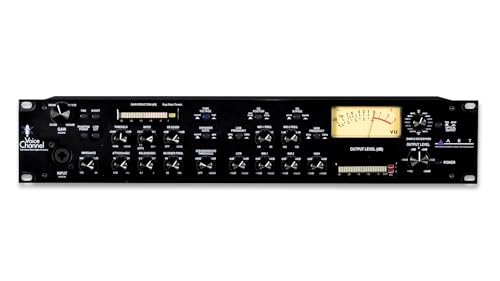
- Tube preamp design for warmth and definition
- Compressor, expander, de-esser, and gate included
- USB plus ADAT, AES/EBU, S/PDIF, and TOSLink outputs
Best For: Voiceover studios requiring flexible digital connectivity
Best Premium Preamp and EQ

- Up to 80 dB of microphone, line, and DI gain
- Transformer-balanced Class A circuitry
- Three-band EQ with polarity reverse
Best For: High-end voiceover recording focused on preamp tone and EQ
Best Tube Voiceover Tone Shaping

- Class A 12AX7 tube preamp with tube drive
- VCA compressor and three-band EQ onboard
- High-pass filter, pad, phantom power, and polarity reverse
Best For: Voiceover setups needing tube character and adjustable EQ
Tube Tone Control
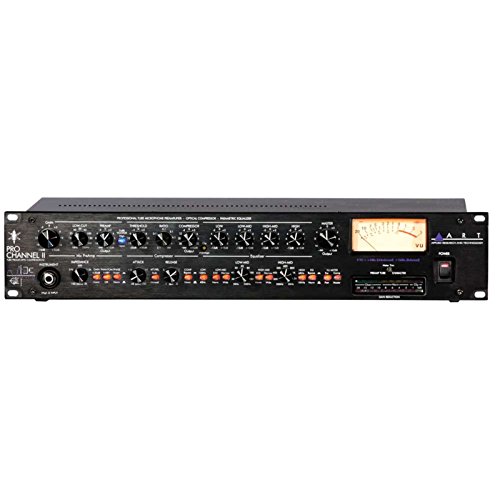
- Tube mic pre, compressor, and EQ in one unit
- Selectable optical or tube compression
- Selectable VU metering for three signal points
Best For: Voiceover users wanting integrated tube-based processing
Class A Voice Front End

- Class A mic/line preamp
- Custom transformer outputs with Silk enhancement
- Eight-segment LED metering and compressor
Best For: Mono voice chains emphasizing preamp character and metering
Tube Vocal Character

- Dedicated tube recording channel
- Designed for recording applications
- Universal Audio hardware format
Best For: Voiceover users prioritizing tube-based recording character
Transformer-Toned Control

- Mic/instrument preamp with Lundahl I/O transformers
- Built-in compressor/limiter and three-band EQ
- Includes output metering in a mono channel strip
Best For: Voiceover setups needing integrated preamp, dynamics, and EQ control
Tube-Driven Vocal Character
Avalon VT-737sp Tube Channel Strip

- Four Sovtek 6922 dual-triode vacuum tubes
- High-voltage discrete Class A circuit design
- Mic, line, and instrument connectivity
Best For: Voiceover engineers wanting a tube-based single-channel signal path
USB Voiceover Convenience

- One-channel mic/line preamp with USB interface
- Includes compressor, gate/expander, and de-esser
- Supports up to 192 kHz sample rate
Best For: Computer-based voiceover recording with integrated vocal processing
Best All-Around Voiceover Control – dbx 286s Channel Strip
The dbx 286s is a practical channel strip for voiceover work when you want microphone preamplification plus several dedicated processing stages in one rack unit. Its compressor, de-esser, enhancer, and expander/gate can help shape speech before it reaches your recording or mixing setup.
Best For: Voiceover users who want a straightforward, hardware-based vocal chain with multiple processors and clear front-panel status monitoring.
Pros:
- Combines a microphone preamp with compression, de-essing, enhancement, and expander/gate processing.
- De-esser targets harsh high frequencies and sibilance, while the compressor helps control dynamic range.
- Includes XLR and 1/4-inch inputs, an insert/loop-out connection, and rack-mount hardware.
- Status LEDs make audio levels and processor activity easy to monitor.
Cons:
- It is a single-channel, wired rack unit rather than a compact desktop interface.
- The supplied notes do not indicate built-in digital connectivity or USB recording.
The 286s is a strong value-oriented choice for spoken-word setups that benefit from hands-on analog-style control. It is especially useful when you want several essential voice-processing tools without assembling separate processors.
Best Digital-Ready Voice Channel Strip – ART VoiceChannel
The ART VoiceChannel is a channel strip for voiceover that combines a tube-based preamp design with dynamics control and extensive digital output options. It suits recording environments where warmth, de-essing, gating, and direct computer or digital-system connectivity are all important.
Best For: Voiceover and recording setups that need tube preamp character alongside flexible digital routing.
Pros:
- ART tube preamp design is intended to provide warmth and definition.
- Includes compressor, expander, de-esser, and gate for shaping vocal dynamics.
- Offers ADAT, AES/EBU, S/PDIF, TOSLink, and USB connectivity.
- Supports sample rates up to 192 kHz according to the supplied specifications.
Cons:
- The supplied notes do not describe the exact control layout or processing ranges.
- Its broad connectivity may be more than needed for a simple analog-only voiceover chain.
Choose the VoiceChannel when digital integration is a priority rather than an afterthought. Its combination of tube preamplification, vocal dynamics tools, and multiple digital formats makes it a flexible centerpiece for a more advanced recording system.
Best Premium Preamp and EQ – Neve 1073SPX
The Neve 1073SPX is a focused channel strip for voiceover built around a transformer-balanced Class A microphone, line, and DI preamp with up to 80 dB of gain. Its three-band EQ and polarity reverse provide core tone-shaping and signal-management tools for detailed vocal recording.
Best For: Voiceover engineers prioritizing high-gain preamplification, Class A circuitry, and dedicated three-band EQ.
Pros:
- Provides up to 80 dB of gain for microphone, line, and DI sources.
- Uses transformer-balanced Class A circuitry.
- Includes a three-band EQ for shaping the recorded signal.
- Accepts microphones, guitars, basses, keyboards, and other listed sources.
Cons:
- The supplied notes do not list a compressor, de-esser, gate, or expander.
- It offers a more focused preamp/EQ feature set than an all-in-one vocal processor.
The 1073SPX is best viewed as a premium preamp and EQ rather than a complete voice-processing suite. It is a compelling fit when the recording chain calls for substantial gain and Class A transformer-balanced preamp character, while additional dynamics processing can be handled elsewhere.
Best Tube Voiceover Tone Shaping – PreSonus StudioChannel
The PreSonus StudioChannel is a channel strip for voiceover that pairs a high-voltage Class A 12AX7 tube preamp with a VCA compressor and three-band EQ. It provides input, gain, filtering, and dynamics controls for building a shaped vocal signal in a rackmount format.
Best For: Voiceover users seeking tube preamp character with integrated compression and flexible mid-band EQ control.
Pros:
- Combines a Class A tube preamplifier, VCA compressor, and three-band EQ.
- Provides tube drive, high-pass filtering, a -20 dB pad, phantom power, and polarity reverse.
- Variable-Q mid-band EQ and shelving/peak controls support detailed tone shaping.
- Accepts microphone, instrument, and line inputs in a rugged 1U rack chassis.
Cons:
- The supplied notes do not mention a dedicated de-esser or expander/gate.
- Its extensive controls may be unnecessary for users wanting a simple voiceover signal path.
StudioChannel is a versatile option for shaping vocal tone before recording, especially when tube drive and adjustable midrange control appeal to your workflow. It covers the main preamp, compression, and EQ duties, though specialized sibilance or gate processing may require additional equipment.
Tube Tone Control – ART Pro Channel II
ART Pro Channel II Microphone Preamp/Compressor/EQ Professional Tube Based Selectable VU Metering
Check Price On AmazonThe ART Pro Channel II is a versatile channel strip for voiceover with three dedicated sections: a tube microphone preamp, selectable optical or tube compression, and tube EQ. Its selectable VU metering also helps you monitor different points in the signal path while recording speech, streaming, or other vocal material.
Best For: Voiceover users who want tube-based preamp, compression, and EQ in one professional rack-style unit.
Pros:
- Combines a tube mic pre, switchable compressor, and tube EQ.
- Supports XLR, 1/4-inch TRS, and 1/4-inch TS connectivity.
- Selectable VU metering can monitor mic pre out, compressor out, or main out.
- Includes precision detented potentiometers and a 2-year warranty.
Cons:
- At 13.4 pounds, it is relatively heavy for a single-channel unit.
- The supplied notes identify one channel, so it is intended for mono processing.
For a voiceover setup that benefits from adjustable tube character and integrated dynamics and EQ, the Pro Channel II offers a broad set of front-end tools in one chassis.
Class A Voice Front End – Rupert Neve Designs Newton
The Rupert Neve Designs Newton is a mono channel strip for voiceover built around a Class A mic/line preamp, custom transformer outputs, Silk harmonic enhancement, LED metering, and compression. It is suited to a focused vocal recording chain where preamp tone and straightforward level control are priorities.
Best For: Voiceover recording chains that need a Class A mic/line preamp with transformer output, harmonic enhancement, metering, and compression.
Pros:
- Uses a Class A microphone/line preamp.
- Features custom transformer outputs and Silk harmonic enhancement.
- Includes an eight-segment LED meter and compressor.
- Designed as a dedicated mono channel strip.
Cons:
- The supplied specifications identify it as a mono unit, not a stereo processor.
- The provided notes do not specify detailed connector options or compressor controls.
The Newton is a focused choice for users who value Class A preamp design, transformer output character, and harmonic enhancement in a single vocal channel.
Tube Vocal Character – Universal Audio LA-610 MKII
The Universal Audio LA-610 MKII is a tube recording channel designed for a vocal-focused channel strip for voiceover setup. Its supplied notes identify it specifically as a tube recording channel, making it a candidate for users seeking tube-based character in a dedicated recording front end.
Best For: Voiceover users looking for a dedicated tube recording channel from Universal Audio.
Pros:
- Designed as a tube recording channel.
- Dedicated hardware format for recording applications.
- Compact listed package dimensions of 22.01 by 17.52 by 7.01 inches.
Cons:
- The supplied notes provide limited detail about connectivity and onboard controls.
- At 12.97 pounds, it is not a lightweight unit.
The LA-610 MKII is best considered when tube-based recording character is the main priority and you prefer a dedicated Universal Audio hardware channel for voice work.
Transformer-Toned Control – SPL Track One MK3
The SPL Track One MK3 is a substantial mono channel strip for voiceover, combining a mic/instrument preamp with Lundahl input and output transformers, compression/limiting, metering, and a three-band EQ. It suits setups where you want recording and basic dynamics and tone control in one unit.
Best For: Voiceover users who want transformer-equipped input and output stages plus integrated compression and EQ.
Pros:
- Combines mic/instrument preamp, compressor/limiter, metering, and three-band EQ.
- Uses Lundahl I/O transformers.
- Provides a dedicated mono channel-strip format for focused vocal processing.
Cons:
- At 10.39 pounds and 21.35 inches wide, it may require considerable desk or rack space.
- It is a single-channel unit, so it is not intended for multi-mic tracking without additional hardware.
The Track One MK3 is a feature-rich choice when a voiceover chain needs preamp, dynamics, EQ, and output monitoring together. Check its physical dimensions before planning your installation.
Tube-Driven Vocal Character – Avalon VT-737sp Tube Channel Strip
The Avalon VT-737sp is a single-channel tube channel strip for voiceover, built around four Sovtek 6922 dual-triode vacuum tubes and a high-voltage discrete Class A circuit. Its transformer-balanced microphone input offers a gain range from 0 to +58 dB, while the unit also provides line and instrument connections.
Best For: Voiceover engineers seeking a tube-based, Class A channel-strip design with microphone, line, and instrument connectivity.
Pros:
- Uses four Sovtek 6922 dual-triode vacuum tubes.
- Employs a high-voltage discrete Class A topology.
- Offers transformer-balanced microphone input with up to +58 dB of gain, plus line and instrument inputs.
Cons:
- At 28.3 pounds, it is relatively heavy for a one-channel unit.
- The supplied notes do not specify the included processing sections, so buyers should verify the exact feature set for their workflow.
The VT-737sp is aimed at users prioritizing a tube and Class A signal path in a premium mono format. Its weight and one-channel design make installation planning especially important.
USB Voiceover Convenience – Behringer Ultravoice UV1
The Behringer Ultravoice UV1 combines a one-channel mic/line preamp with a USB audio interface, making it a practical channel strip for voiceover recording directly to a computer. Its listed processing includes compression, a gate/expander, and a de-esser.
Best For: Computer-based voiceover users who want a single-channel preamp, vocal processing, and USB connectivity in one unit.
Pros:
- Combines a mic/line preamp and USB audio interface.
- Includes compressor, gate/expander, and de-esser functions.
- Supports Windows 10 and Mac OS X 10.4 or higher, with a maximum sample rate of 192 kHz.
Cons:
- It provides one channel, limiting simultaneous multi-microphone recording.
- The supplied notes identify USB connectivity but do not detail other analog output or routing options.
The UV1 is the most computer-oriented option here, especially for a streamlined voiceover setup that needs basic vocal processing before or during USB recording. Its one-channel layout keeps the focus on a single microphone.
How We Picked the Best Channel Strip for Voiceover
We selected these models for their usefulness on spoken-word recordings, overall signal quality, control layout, processing options, connectivity, and suitability for different budgets. Because voiceover needs vary, the list includes compact and affordable units as well as premium channel strips designed for professional studios.
We also considered practical features such as dedicated de-essing, compression, noise gating, high-pass filtering, digital outputs, metering, tube coloration, and the ability to bypass or fine-tune each processing stage. A strong Channel Strip for Voiceover should improve clarity and consistency without making the narrator sound overly processed.
Quick Comparison
| Best For | What to Look For |
|---|---|
| Home studios | Low noise, simple controls, and reliable preamp gain |
| Broadcast-style narration | Controlled compression, de-essing, and a clean, present vocal tone |
| Warm character | Tube stages, transformer coloration, and adjustable saturation |
| Flexible production | Comprehensive EQ, dynamics, routing, and accurate metering |
| Computer-based setups | USB or digital outputs that reduce the need for extra conversion hardware |
Key Buying Factors for a Channel Strip for Voiceover
Preamp Quality and Gain
Choose a preamp with enough clean gain for your microphone, particularly if you use a low-output dynamic broadcast mic. Low self-noise and stable gain control matter more than adding coloration you may not need.
Compression and De-Essing
Compression keeps narration at a more consistent level, while a de-esser reduces harsh “s” and “sh” sounds. Adjustable threshold, ratio, attack, release, and frequency controls provide more useful results than fixed processing.
EQ and Filtering
A high-pass filter can reduce rumble and handling noise, while carefully applied EQ can improve intelligibility. Look for sweepable midrange controls if you need to solve boxiness, nasal tone, or excessive brightness.
Tube Character Versus Clean Accuracy
Tube circuitry can add warmth and density, but it may also introduce coloration and extra maintenance. Clean solid-state designs are often easier to match with different microphones and are well suited to transparent narration.
Connections and Workflow
Check whether the unit offers balanced outputs, insert points, digital connectivity, or USB. Make sure its output level and impedance work with your interface, mixer, recorder, or camera setup.
Who Should Buy Which Channel Strip for Voiceover?
Choose a straightforward, affordable model if you are building a first home voiceover chain and want compression, de-essing, and gating in one rack unit. Models with USB connectivity are especially practical when you want to record directly into a computer with fewer separate components.
Choose a versatile midrange channel strip if you record multiple voices, produce commercial reads, or need detailed control over dynamics and tone. These units offer enough flexibility to handle changing microphones, narrators, and room conditions.
Choose a premium tube or transformer-based design if you already have a treated recording space and a high-quality microphone, and you want a distinctive, polished sound. Premium options make the most sense when reliability, headroom, metering, and long-term studio integration matter more than minimizing cost.
Before buying, match the strip to your microphone’s output, your interface’s available inputs, and the type of narration you produce most often. For many users, the best channel strip is not the one with the most features, but the one that provides quiet gain, controlled dynamics, and repeatable results with minimal adjustment.