
Choosing the right enclosure can make backups faster, safer, and easier to manage. The best hard drive enclosures for backups give you the flexibility to reuse SATA drives, expand storage on demand, and keep data access simple.
Below, we’ve focused on practical options for everyday backup use, from single-drive enclosures to larger multi-bay models for growing storage needs.
Best 10 Hard Drive Enclosures for Backups Picks for 2026
Simple 3.5" Backup Enclosure
ORICO 3.5" Tool-Free SATA Enclosure

- Tool-free setup for one 3.5-inch SATA drive
- USB 3.0 with UASP and up to 5Gbps
- Supports drives up to 20TB with included power supply
Best For: Single-drive desktop backups
Multi-Bay Backup Workhorse

- 4-bay diskless enclosure for up to 120TB total
- USB 3.2 Gen2 Type-C with up to 10Gbps
- Hot-swappable trays and quiet cooling design
Best For: Large backup setups needing multiple drives
Desktop Backup Dock
GODO 3.5" Aluminum SATA Enclosure

- USB 3.0 with UASP and Trim support
- Aluminum body for heat dissipation and durability
- Includes power adapter and vertical stand
Best For: Single-drive desktop backups with a metal enclosure
RAID Backup Expansion Box

- Eight modes including RAID 1, JBOD, and CLONE
- Supports up to 88TB with 3.5-inch SATA drives
- Built-in 150W power and 80mm cooling fan
Best For: Redundant backups and flexible multi-drive storage
Tool-Free Single-Drive Pick
SABRENT USB 3.0 SATA Enclosure
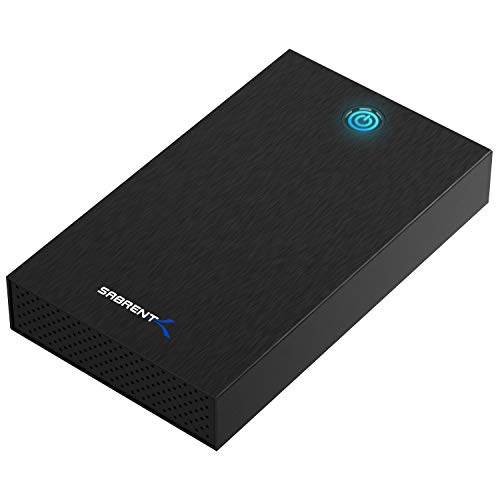
- Tool-free setup for fast drive swaps
- Fits 2.5-inch and 3.5-inch SATA drives
- Includes external power and UASP support
Best For: Simple single-drive backups on a desktop setup
High-Capacity Multi-Bay Backup Option
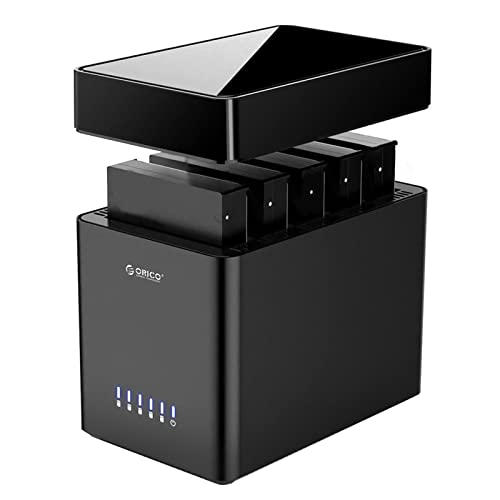
- Five bays for larger backup storage
- Tool-free magnetic cover for quick access
- Includes fan cooling and protection features
Best For: Expanded home backup and media storage
Fast Aluminum Backup Dock

- 6Gbps transfer support with UASP
- Aluminum shell and open-frame tray for cooling
- Independent switch plus 10-minute sleep mode
Best For: Faster desktop backups with better heat management
Budget 3.5-Inch Backup Dock
ELUTENG 3.5 Hard Drive Enclosure

- USB 3.0 with UASP and Realtek 9201R
- Supports 2.5/3.5-inch SATA drives up to 20TB
- Includes power adapter, cable, and foam
Best For: Home backup drives and simple plug-and-play storage
Dual-Bay Backup Station
CENMATE Aluminum 2 Bay Enclosure

- Holds two 2.5/3.5-inch SATA drives
- Hot-swappable, tool-free trays
- Aluminum body with built-in cooling fan
Best For: People who need a two-drive desktop backup enclosure
Simple High-Speed Backup Case
UGREEN External Hard Drive Enclosure
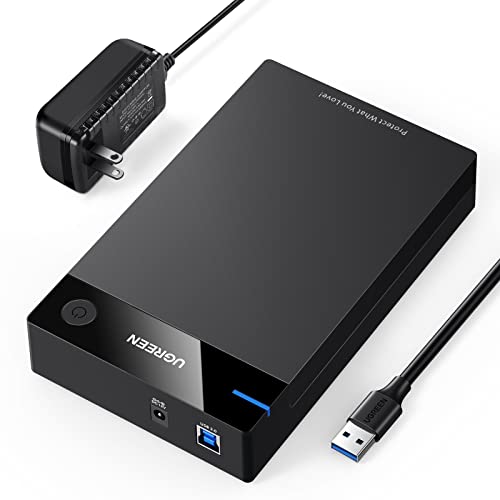
- Supports 2.5/3.5-inch SATA drives up to 20TB
- USB 3.0 with UASP for faster transfers
- Anti-shock strips and heat-dissipation holes
Best For: Straightforward single-drive backups and extra storage
Simple 3.5" Backup Enclosure – ORICO 3.5" Tool-Free SATA Enclosure
If you want a straightforward choice among hard drive enclosures for backups, this ORICO model focuses on simple setup and broad compatibility. It supports 3.5-inch SATA drives up to 20TB, uses USB 3.0 with UASP, and includes the power adapter needed for a stable desktop backup setup.
Best For: Users who want a no-fuss single-drive enclosure for everyday backup storage.
Pros:
- Tool-free installation with plug-and-play use
- USB 3.0 with up to 5Gbps transfer and UASP support
- Supports 3.5-inch SATA drives up to 20TB
- Includes 12V/2A power supply, USB cable, and thermal pads
Cons:
- Designed for one drive only
- 3.5-inch use requires the external power adapter
- Basic enclosure design, not a multi-bay backup system
For a single-disk backup workflow, this enclosure covers the essentials without extra complexity. It is best suited to users who want easy drive access, broad OS support, and a dependable desktop enclosure for periodic or ongoing backups.
Multi-Bay Backup Workhorse – TerraMaster D4-320 4-Bay DAS
Among hard drive enclosures for backups, the TerraMaster D4-320 stands out for users who need room to grow. This 4-bay DAS supports 3.5-inch HDDs, 2.5-inch HDDs, and 2.5-inch SATA SSDs, with USB 3.2 Gen2 connectivity rated up to 10Gbps and support for up to 120TB total capacity.
Best For: Builders who want a fast, flexible multi-drive backup enclosure without RAID requirements.
Pros:
- 4-bay design with individual disk support and up to 120TB total capacity
- USB 3.2 Gen2 and Type-C interface with up to 10Gbps transfer
- Hot-swappable and tool-free tray design for easier drive changes
- Built-in cooling fan plus sound-damping features for quieter operation
Cons:
- Diskless unit, so drives must be purchased separately
- No RAID function, which may limit some backup strategies
- Larger and heavier than a single-bay enclosure
This is a strong fit if your backup needs extend beyond one drive and you want simple, direct-attached storage rather than NAS features. The mix of speed, hot swapping, and broad OS compatibility makes it practical for larger backup libraries.
Desktop Backup Dock – GODO 3.5" Aluminum SATA Enclosure
If you need a simple desktop option for hard drive enclosures for backups, this GODO enclosure keeps the focus on speed and stability. It supports 3.5-inch SATA drives up to 18TB, uses USB 3.0 with UASP and Trim, and includes a 12V/2A power supply for steady operation.
Best For: Users who want a stable single-drive backup enclosure with aluminum construction.
Pros:
- USB 3.0 with UASP and Trim support
- Aluminum housing helps with heat dissipation and static protection
- Includes 12V/2A power adapter and LED progress indicator
- Vertical stand design helps keep the desktop organized
Cons:
- Supports one 3.5-inch drive only
- Maximum listed capacity is 18TB
- Screw-based installation is less convenient than tool-free designs
This model makes sense if your backup plan centers on one drive and you value a solid metal enclosure over extra features. It is practical for everyday desktop use, especially when you want a compact setup with included stand accessories.
RAID Backup Expansion Box – ORICO 4-Bay RAID Enclosure
For buyers comparing hard drive enclosures for backups, this ORICO 4-bay enclosure is the most configurable option in the group. It supports eight modes including RAID 0, RAID 1, RAID 3, RAID 5, RAID 10, JBOD, CLONE, and CLEAR, making it useful when you want backup flexibility and drive management in one unit.
Best For: Users who want RAID-based backup options and multi-drive expansion in a single enclosure.
Pros:
- Eight configuration modes, including RAID 1 and CLONE for backup use
- Supports up to 88TB total capacity with 3.5-inch SATA drives
- Built-in 150W power supply for multi-drive operation
- Aluminum build with 80mm silent cooling fan and front/rear vents
Cons:
- More complex than a basic single-drive enclosure
- Only supports 3.5-inch SATA disks
- Backup setup depends on selecting and managing the right RAID mode
This enclosure is a better fit for users who want structured backup redundancy or disk cloning rather than simple external storage. If your goal is a scalable backup box with more control over data protection, it offers more options than a standard enclosure.
Tool-Free Single-Drive Pick – SABRENT USB 3.0 SATA Enclosure
If you want a straightforward hard drive enclosure for backups, this SABRENT model keeps the process simple: slide in a SATA 2.5-inch or 3.5-inch drive, connect USB 3.0, and start copying. It’s a practical choice for turning an internal SATA HDD or SSD into external backup storage, with UASP support and a sturdy aluminum shell for everyday use.
Best For: Single-drive backup setups, quick drive swaps, and users who want a tool-free enclosure with external power.
Pros:
- Tool-free design makes drive installation fast and easy.
- Supports 2.5-inch and 3.5-inch SATA HDDs and SSDs.
- Includes a 12V/2A power adapter for stable desktop use.
- Aluminum shell and shock-absorbing tray help with durability and heat dissipation.
Cons:
- Only works with SATA drives, not M.2, NVMe, SAS, or IDE/PATA.
- Requires wall power, so it is not bus-powered.
- USB-C-only computers need an adapter, which is not included.
This is a solid no-fuss enclosure if your backup plan centers on one SATA drive and you want plug-and-play compatibility across Windows, macOS, and Linux.
High-Capacity Multi-Bay Backup Option – ORICO 5-Bay SATA Enclosure
For hard drive enclosures for backups, this ORICO 5-bay model is built for users who need more room than a single-disk dock can offer. It supports multiple 2.5-inch and 3.5-inch SATA drives, uses a magnetic tool-free cover, and adds active cooling to help keep larger backup arrays running comfortably.
Best For: Home backup libraries, media collections, and users who want a larger multi-drive enclosure with cooling.
Pros:
- Five-bay design supports larger backup and storage setups.
- Tool-free magnetic cover speeds up drive access.
- Built-in 60mm fan and vented rear panel aid heat dissipation.
- Includes multiple protection features for safer data handling.
Cons:
- Linux users should note the product warning that only one drive can be read at a time.
- Designed for SATA drives only, not NVMe or other formats.
- Larger footprint than a single-drive enclosure.
If you’re building a backup station for family files, photos, or video libraries, this ORICO enclosure offers a lot of capacity in one box while adding cooling and easy drive access.
Fast Aluminum Backup Dock – ACASIS 6Gbps SATA Enclosure
If speed matters in your hard drive enclosures for backups, this ACASIS unit is designed around 6Gbps transfer support with UASP and a USB 3.2 Gen 2 connection. It also pairs that performance focus with an aluminum shell, an open-frame internal tray, and an independent switch for a more convenient desktop backup workflow.
Best For: Faster backup transfers, longer write sessions, and users who want a power switch plus smart sleep mode.
Pros:
- Supports 6Gbps transfer speeds with UASP transmission.
- Aluminum shell and open-frame tray are built for heat dissipation.
- Independent switch makes power control easier.
- 10-minute smart sleep mode helps reduce power use.
Cons:
- Uses external power, so it is not a portable bus-powered option.
- Notes present conflicting drive-size details, so buyers should verify fit for their intended drive.
- Best suited to desktop backup use rather than travel.
Overall, this ACASIS enclosure is a strong fit when you want a more performance-oriented backup dock with better thermal management and convenient power controls.
Budget 3.5-Inch Backup Dock – ELUTENG 3.5 Hard Drive Enclosure
If you want hard drive enclosures for backups that keep things simple, this ELUTENG model is built around straightforward 3.5-inch storage with support for 2.5-inch SATA drives as well. It offers USB 3.0 speeds, UASP support, and a included 12V power adapter, so it is aimed at regular file copying and backup jobs rather than fancy extras.
Best For: Home users who want a basic, powered enclosure for 3.5-inch backup drives
Pros:
- Supports 3.5-inch and 2.5-inch SATA HDD/SSD up to 20TB
- USB 3.0 with UASP and a Realtek 9201R chipset for faster transfers
- Includes a 12V power adapter, data cable, and shockproof foam
- RGB lighting gives a visible power/status cue on the desktop
Cons:
- Designed for single-drive use, so it is not an expansion bay
- RGB lighting may not appeal to users who prefer a plain enclosure
Overall, this is a practical backup enclosure if you mainly need a powered, plug-and-play shell for one large SATA drive. The included accessories and broad OS support make setup easy, but the real value is in dependable everyday storage rather than advanced features.
Dual-Bay Backup Station – CENMATE Aluminum 2 Bay Enclosure
Among hard drive enclosures for backups, this CENMATE dual-bay model stands out for users who want to manage more than one drive in a single desktop unit. It supports 2.5-inch and 3.5-inch SATA HDDs and SSDs, includes USB 3.0 transfer speeds, and adds a cooling fan plus hot-swappable trays for easier drive handling.
Best For: Users who want a two-drive backup enclosure with easy swapping and cooling
Pros:
- Dual-bay design supports two 2.5-inch or 3.5-inch SATA drives
- Hot-swappable and tool-free for quick drive changes
- Built-in aluminum alloy body and fan help with heat management
- USB A/C 3.0 support with plug-and-play compatibility
Cons:
- Fan noise is listed around 40-50 dB
- Not a RAID or NAS device, so it is limited to DAS use
This enclosure makes sense if your backup workflow benefits from swapping drives or keeping multiple disks in one place. The cooling fan, tool-free design, and daisy-chain expansion support add flexibility, though the fan noise and non-RAID design are important tradeoffs.
Simple High-Speed Backup Case – UGREEN External Hard Drive Enclosure
If you are comparing hard drive enclosures for backups and want a simple single-drive option, this UGREEN enclosure keeps the focus on compatibility and transfer speed. It supports 2.5-inch and 3.5-inch SATA HDDs and SSDs up to 20TB, uses USB 3.0 with UASP, and includes basic protection features like anti-shock strips and heat dissipation holes.
Best For: Anyone who wants a straightforward single-drive enclosure for backup and extra storage
Pros:
- Supports 2.5-inch and 3.5-inch SATA drives up to 20TB
- USB 3.0 plus UASP for faster file transfers
- Built-in chip, anti-shock rubber strips, and heat holes for added protection
- Plug-and-play setup with broad OS and device compatibility
Cons:
- Single-drive design only, so it is not suited to multi-disk workflows
- No included power details beyond its stable energy supply design
For a no-drama backup enclosure, this UGREEN model covers the essentials well. It is a good fit if you want broad compatibility, quick setup, and dependable transfer speeds without needing a more complex dual-bay setup.
How We Picked These Hard Drive Enclosures for Backups
We looked for enclosures that balance reliability, compatibility, and backup-friendly features. That means broad support for 2.5-inch and 3.5-inch SATA drives, stable USB performance, tool-free or easy-access designs, and models with enough power delivery and cooling for long backup sessions. For multi-drive units, we also considered RAID support, expansion potential, and ease of setup.
Quick Comparison: Which Type Fits Your Backup Workflow?
Single-bay enclosures are ideal if you want a simple way to protect one drive, clone a disk, or move backups between computers. Multi-bay enclosures make more sense if you manage multiple backup drives, want a local archive system, or need room to grow. RAID-capable models are best for users who want flexibility in how drives are combined, though RAID is not the same as a true offsite backup strategy.
Key Buying Factors for Hard Drive Enclosures for Backups
Drive Size and Capacity Support
Check whether the enclosure supports 2.5-inch drives, 3.5-inch drives, or both. Also confirm the maximum capacity rating, especially if you plan to use high-capacity HDDs for long-term backup storage.
Power and Cooling
3.5-inch drives typically need external power, and larger enclosures benefit from active cooling. For backup use, sustained reliability matters more than peak speed, so look for steady airflow, proper power adapters, and heat management that matches your drive count.
Connection Speed and Stability
USB 3.0 is usually enough for most backup jobs, while faster interfaces can help with large transfers and multi-drive workflows. More important than raw speed is consistent performance, since backup tasks often run for long periods.
Ease of Use
Tool-free installation, hot-swap support, and clear drive access can save time if you rotate backup disks often. If you only set up storage once, simpler designs may be perfectly adequate.
Who Should Buy Which Hard Drive Enclosures for Backups?
If you want the easiest route to a dependable backup drive, choose a single-bay enclosure. If you’re building a small home archive or rotating several disks, a 2-bay or 4-bay model is usually the better fit. Power users and small-office buyers who need more flexibility should consider multi-bay or RAID-capable Hard Drive Enclosures for Backups, especially when future expansion is likely.
In short, match the enclosure to your backup habits first, then choose the fastest and most feature-rich model that still fits your drives, desk space, and budget.