
Choosing the right audio interface for drum recording can make or break your session. Drums need enough inputs, clean preamps, and dependable routing so every mic stays in sync.
Below, we’ve focused on interfaces that make multitrack drum capture easier, from compact options for small kits to larger rigs built for full-band tracking.
Best 10 Audio Interface for Drum Recording Picks for 2026
16-Input Rackmount Workhorse
Tascam US-16x08 for Drum Sessions
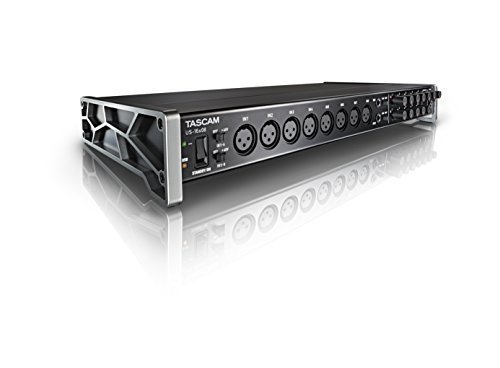
- 16 mic and line inputs for big drum setups
- Eight Ultra-HDDA preamps with up to 56dB gain
- DSP mixer adds EQ, compression, and low-latency monitoring
Best For: Drummers and engineers tracking full kits with lots of microphones
ADAT Expansion Stage
Behringer ADA8200 for Extra Drum Inputs

- Adds eight mic preamp channels via ADAT
- Midas preamps and 24-bit conversion
- Best as an expansion unit for an existing interface
Best For: Expandable drum rigs that need more mic channels
Portable Starter Pick
PreSonus AudioBox 96 for Small Drum Setups
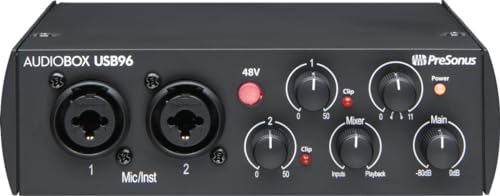
- Two Class-A mic preamps for simple recording
- Bus-powered USB design for portability
- 24-bit/96 kHz conversion with MIDI I/O
Best For: Small drum sessions and portable two-channel recording
High-Channel USB Hub
Behringer UMC1820 for Drum Multitracking

- 18 inputs and 20 outputs for big sessions
- Eight MIDAS-designed mic preamps with phantom power
- ADAT I/O supports expansion and routing
Best For: Full-kit drum multitracking and larger studio setups
Compact Starter Pick
Focusrite Scarlett Solo 3rd Gen for simple drum tracking

- 24-bit/192kHz conversion for clean recording
- Air mode adds clarity to mic sources
- Gain Halo indicators help prevent clipping
Best For: Simple drum tracking and beginner home studios
Full-Scale Studio Choice
Fender Quantum LT 16 for multi-mic drum sessions

- Eight MAX-HD preamps with up to +75 dB gain
- 16-in/8-out layout for larger drum setups
- Fourteen line inputs for hardware and expansion
Best For: Multi-mic drum recording and hardware-heavy studios
Portable Budget Option
M-Audio M-Track Duo for basic drum capture
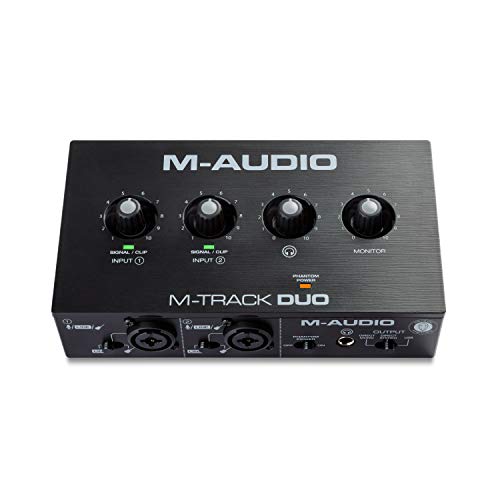
- Two combo inputs for mics, instruments, or line signals
- Direct monitoring for zero-latency tracking
- Portable entry-level design for small setups
Best For: Budget drum recording and small home studios
Studio Hub for Larger Setups
Focusrite Scarlett 4i4 4th Gen

- 4-in/4-out layout with 2 mic preamps and 4 line inputs
- 120dB dynamic range, 24-bit/192kHz recording
- Auto Gain, Clip Safe, and included software bundle
Best For: Home studios needing flexible I/O for drum recording and other instruments
Compact Budget Pick

- Combo XLR/line input with phantom power
- USB/direct monitoring for zero-latency tracking
- Includes MPC Beats software bundle
Best For: Budget users who need a basic interface for simple drum recording
Best Starter Interface
Focusrite Scarlett 2i2 4th Gen

- 2 mic preamps with 24-bit/192kHz recording
- Auto Gain and Clip Safe for easier tracking
- Includes major recording software and plugins
Best For: Small studios and solo users recording simple drum sessions
16-Input Rackmount Workhorse – Tascam US-16×08 for Drum Sessions
If you need an audio interface for drum recording with enough inputs to capture a full kit plus extra mics, the Tascam US-16×08 is built for larger sessions. It offers 16 mic and line inputs, eight Ultra-HDDA preamps, and eight balanced outputs, making it a practical choice for multi-mic tracking and monitoring.
Best For: Drum recordists who need lots of inputs, solid onboard preamps, and low-latency monitoring in a rackmount setup.
Pros:
- 16 total mic and line inputs for multi-mic drum setups
- Eight Ultra-HDDA preamps with up to 56dB of gain
- Built-in DSP mixer with four-band EQ and compression
- Eight balanced outputs for flexible monitoring and routing
Cons:
- Windows-focused compatibility in the supplied details
- Large rackmount unit may be more than needed for small setups
The US-16×08 makes the most sense when drum recording demands more channels than a basic interface can offer. Its strength is straightforward: enough I/O to handle a big kit and the onboard tools to keep monitor mixes under control while you track.
ADAT Expansion Stage – Behringer ADA8200 for Extra Drum Inputs
Behringer ADA8200 Audiophile 8 In/8 Out ADAT Audio Interface with Midas Mic Preamplifiers
Check Price On AmazonIf you already have a main interface and need an audio interface for drum recording expansion, the Behringer ADA8200 is designed to add eight more channels through ADAT optical. It uses Midas mic preamplifiers and 24-bit conversion, so it fits well as a straightforward way to grow a drum tracking rig.
Best For: Recording setups that need eight additional mic inputs through ADAT without replacing the main interface.
Pros:
- Eight-channel microphone preamp section for drum mic expansion
- Midas mic preamplifiers for the input stage
- 24-bit AD/DA conversion with ADAT optical out
- Simple add-on format for larger recording systems
Cons:
- Max sample rate is listed at 48 kHz
- Needs an ADAT-capable main interface to be useful
The ADA8200 is less of a standalone interface and more of a practical channel extender. For drum recording, that can be exactly what you need if your current setup is short on mic inputs but already has ADAT I/O.
Portable Starter Pick – PreSonus AudioBox 96 for Small Drum Setups
For an audio interface for drum recording in a smaller or more portable setup, the PreSonus AudioBox 96 keeps things simple with two Class-A mic preamps and 24-bit/96 kHz conversion. It is a compact USB bus-powered interface that works well when you only need a basic stereo or minimal-mic drum capture path.
Best For: Small drum recording setups, mobile rigs, and users who want an easy two-channel interface.
Pros:
- Two Class-A mic preamps for compact recording setups
- 24-bit/96 kHz recording and playback support
- USB bus power keeps the interface portable
- Includes MIDI I/O and zero-latency mixer control
Cons:
- Only 2 channels, so it is not built for full multi-mic drums
- Global phantom power may be less flexible than per-channel control
The AudioBox 96 is a smart fit if you are tracking drums with a minimal mic setup or want a lightweight interface for practice and portable recording. It offers solid core features, but its two-input design keeps it focused on simpler sessions.
High-Channel USB Hub – Behringer UMC1820 for Drum Multitracking
The Behringer UMC1820 is an audio interface for drum recording when you need enough channels to handle a full multitrack session. With 18 inputs, 20 outputs, eight MIDAS-designed mic preamps, and ADAT I/O, it is built for larger recording setups that demand flexibility and professional 24-bit/96 kHz support.
Best For: Engineers and drummers who want lots of I/O for full-kit multitracking and expansion.
Pros:
- 18 inputs and 20 outputs for larger drum recording sessions
- Eight MIDAS-designed mic preamps with phantom power
- 24-bit/96 kHz resolution for professional audio quality
- ADAT I/O adds expansion options for bigger rigs
Cons:
- More interface than a simple home setup needs
- Supplied details list macOS support and reference Windows XP or higher
If you are building a serious drum tracking setup, the UMC1820 gives you the channel count and routing flexibility to keep everything organized. It stands out most when a full kit needs multiple microphones and future expansion remains important.
Compact Starter Pick – Focusrite Scarlett Solo 3rd Gen for simple drum tracking
If you need an audio interface for drum recording on a very small setup, the Scarlett Solo 3rd Gen is best viewed as a focused entry point. It gives you one XLR mic preamp, one Hi-Z instrument input, and 24-bit/192kHz conversion, so it can handle a basic close-mic drum workflow or a single overhead plus another source when your setup stays minimal.
Best For: Solo creators or small-home-studio users who want a simple, low-noise interface for basic drum recording and general music tracking.
Pros:
- High-performance mic preamp with a switchable Air mode for extra clarity
- 24-bit/192kHz conversion for studio-quality recording and playback
- Gain Halo indicators help avoid clipping and distortion while tracking
- Low-noise balanced outputs support clean monitoring
Cons:
- Only two channels, so it is limited for multi-mic drum setups
- Single mic preamp means less flexibility than larger interfaces
- Not ideal if you want to record a full kit with several microphones at once
For straightforward drum recording, this interface makes the most sense when you value simplicity, good conversion, and dependable monitoring over input count. It is a practical way to start tracking drums without jumping straight to a larger studio rig.
Full-Scale Studio Choice – Fender Quantum LT 16 for multi-mic drum sessions
When you want an audio interface for drum recording with real expansion headroom, the Fender Quantum LT 16 is built for larger sessions. Its 16-in/8-out layout, eight MAX-HD mic preamps, and fourteen total line inputs make it a strong fit for multi-mic drum setups, hybrid studios, and rigs that need external gear in the chain.
Best For: Recordists who need lots of inputs for full drum kits, hybrid studios, and hardware-heavy production setups.
Pros:
- Eight MAX-HD mic preamps with up to +75 dB of gain for demanding microphones
- 16-in/8-out USB-C design supports multi-mic drums and broader studio routing
- Fourteen total line inputs for synths, mixers, and outboard gear
- Balanced outputs, headphone amp, and low-latency drivers support serious monitoring
Cons:
- Large format is more interface than many small home drum setups need
- Higher input count may be unnecessary if you only record one or two sources at a time
- Best value comes when you actually use the expanded routing and standalone modes
This is the most capable option here for drum recording if you want room to grow into multi-mic sessions. It stands out when you need plenty of preamps, flexible line inputs, and monitoring tools that suit a more serious studio workflow.
Portable Budget Option – M-Audio M-Track Duo for basic drum capture
If your goal is a compact audio interface for drum recording on a budget, the M-Audio M-Track Duo keeps things simple. It offers two combo XLR/Line/Instrument inputs, 48kHz recording, and direct monitoring, which makes it a practical choice for minimal drum miking, practice capture, or recording a couple of sources at once.
Best For: Budget-conscious users who want a portable interface for basic drum recording, streaming, or small home setups.
Pros:
- Two combo inputs handle microphones, instruments, and line signals
- Direct monitoring switch supports zero-latency tracking
- Transparent Crystal Preamps aim for clean sound from microphones
- Portable design is easy to move between setups
Cons:
- 48kHz maximum sample rate is lower than higher-end recording interfaces
- Only two channels, so it is not built for full multi-mic drum kits
- More of an entry-level tool than a deep studio expansion piece
For basic drum tracking, this interface makes sense when you want a small footprint and uncomplicated operation. It is best for simple recordings rather than elaborate drum sessions, but it covers the essentials well for the price tier.
Studio Hub for Larger Setups – Focusrite Scarlett 4i4 4th Gen
If you need an audio interface for drum recording and also want room for mics, synths, and other gear, the Focusrite Scarlett 4i4 4th Gen is built for a more flexible studio setup. It offers 4 inputs, 4 outputs, two 4th Gen mic preamps, two Hi-Z inputs, and four line inputs, so it can handle a growing recording rig without feeling cramped.
Best For: Home studios and musicians who want an audio interface for drum recording plus extra I/O for multiple sources.
Pros:
- 4-in/4-out design with 2 mic preamps, 2 Hi-Z inputs, and 4 line inputs.
- 120dB dynamic range and 24-bit/192kHz recording for studio-quality capture.
- Auto Gain and Clip Safe help set levels and prevent bad takes.
- Includes Pro Tools Intro+, Ableton Live Lite, Cubase LE, and Hitmaker Expansion software.
Cons:
- May be more interface than needed if you only record one mic at a time.
- Drum miking setups that need many simultaneous inputs will still need extra gear.
For buyers who want a capable interface that can grow with their setup, the 4i4 stands out for connectivity and recording features. It is especially practical when you want cleaner workflow tools alongside solid audio specs.
Compact Budget Pick – M-AUDIO M-Track Solo
The M-AUDIO M-Track Solo is a simple audio interface for drum recording if your setup is focused on one microphone or a basic stereo workflow. It delivers 48kHz audio resolution, a combo XLR/line input with phantom power, a separate line/instrument input, and direct monitoring for easy tracking.
Best For: Beginners and budget-conscious users who want a straightforward audio interface for drum recording, streaming, or podcasting.
Pros:
- Combo XLR/line input with phantom power supports microphones, including condenser mics.
- Line/instrument input gives you another source option for simple recording setups.
- USB/direct switch enables zero-latency monitoring.
- Includes MPC Beats software for getting started quickly.
Cons:
- Only 2 channels, so it is not suited to multi-mic drum recording.
- 48kHz max sample rate is lower than higher-end interfaces in this roundup.
- Best suited to small, simple recording setups rather than expanded sessions.
If your drum recording needs are modest, this interface keeps things simple and portable. It is a practical choice when you want basic recording capability without paying for extra channels you may not use.
Best Starter Interface – Focusrite Scarlett 2i2 4th Gen
The Focusrite Scarlett 2i2 4th Gen is a strong audio interface for drum recording when your setup centers on a small number of inputs. It gives you two 4th Gen mic preamps, two Hi-Z instrument inputs, 24-bit/192kHz recording, and the same 120dB dynamic range Focusrite highlights on its higher-tier models.
Best For: Solo musicians and small home studios looking for a clean, easy-to-use audio interface for drum recording and other two-input sessions.
Pros:
- 2 mic preamps and 2 Hi-Z inputs provide a simple but capable recording path.
- 24-bit/192kHz support and 120dB dynamic range for high-fidelity capture.
- Auto Gain and Clip Safe help prevent level issues during recording.
- Includes Pro Tools Intro+, Ableton Live Lite, Cubase LE, and Hitmaker Expansion software.
Cons:
- Only 2 inputs, so it is limited for multi-mic drum recording.
- No line inputs or MIDI I/O, unlike the 4i4 model.
- Better for simple sessions than larger hardware-heavy setups.
For users who want Focusrite’s current-gen recording features in a compact package, the 2i2 is an easy recommendation. It is best when your drum recording approach is minimalist and you value straightforward setup over expanded connectivity.
How We Picked the Best Audio Interface for Drum Recording
We prioritized interfaces that make multichannel drum recording practical: enough mic inputs for kick, snare, toms, and overheads; stable USB or USB-C connectivity; and preamps that can handle dynamic and condenser mics without adding noise. We also looked at ADAT expansion, monitor flexibility, and overall value for home and project studios.
Quick Comparison
If you’re tracking a basic kit, a 2-in or 4-in model can work for minimal setups or submixing. For full multitrack sessions, 8-input and 16-input designs are the better fit. If you plan to expand later, ADAT-equipped models are especially useful because they let you add more mic channels without replacing your main interface.
Key Buying Factors for an Audio Interface for Drum Recording
Input Count and Expansion
Count the mics you actually use. A simple kit may need four to six inputs, while a more detailed setup can require eight or more. If you want room to grow, choose an interface with ADAT so you can add an external preamp stage later.
Preamps and Headroom
Drums produce fast transients and high peaks, so clean gain staging matters. Look for low-noise preamps with enough headroom to keep snare hits and cymbals from distorting when levels get aggressive.
Monitoring and Latency
Low-latency monitoring helps players hear timing accurately during tracking. Direct monitoring, flexible mix control, and stable drivers are especially important when recording drum takes with multiple microphones.
Connectivity and Workflow
USB-C can simplify modern desktop setups, while standard USB interfaces still offer dependable performance. Rackmount models are a strong fit for dedicated studios, while smaller desktop units suit portable or budget-conscious builds.
Who Should Buy Which Audio Interface for Drum Recording?
If you’re recording a full drum kit with individual mics, choose one of the higher-input models first. If you’re capturing simpler drum parts, overheads, or a hybrid setup, a smaller interface may be enough. Producers who expect to expand should favor an ADAT-ready Audio Interface for Drum Recording, since it protects your workflow as your mic count grows.
For most buyers, the best choice comes down to three questions: how many microphones you need today, whether you plan to expand tomorrow, and how much control you want while monitoring takes. Answer those clearly, and the right interface becomes much easier to spot.